
Workshops and Open Circle Conversations : AgriForum in collaboration with ABC Art Room, Kochi Biennale
At ABC Art Room, Kochi-Muziris Biennale 2025–26, FICA recently supported workshops linked to its ongoing AgriForum platform. Aimed at rethinking materiality and its implications in everyday, artistic, and epistemological practices, while being attentive to the ecologies we shape and inhabit, FICA supported the workshops of Malavika Bhatia and Maksud Ali Mondal while the ABC Programme invited Gram Art Project (represented by Aditi Bhattad, Roshani Narnaware Bawne, and Nutan Dwivedi) and Niroj Satpathy to do the same.
The week-long series of workshops had many overlaps and invited participants to rethink the value and socio-cultural connotations of materials around us. They engaged people across age groups with found materials and explored processes of assemblage, collecting, foraging, journaling, eco-printing, dyeing, paper-making, and crocheting, while blending art and co-creation with critical discourses around sustainability, functionality, community, and ecology.
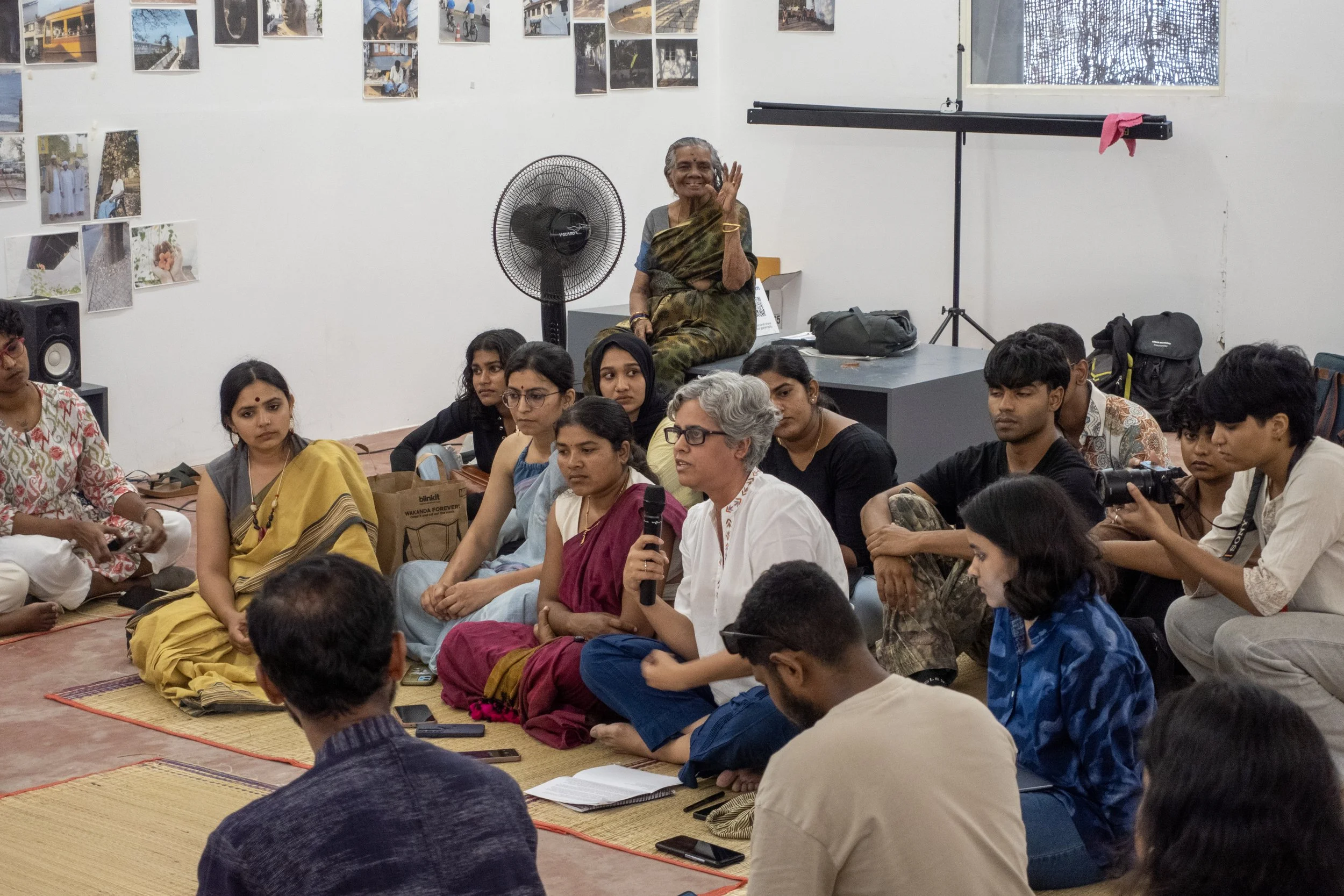
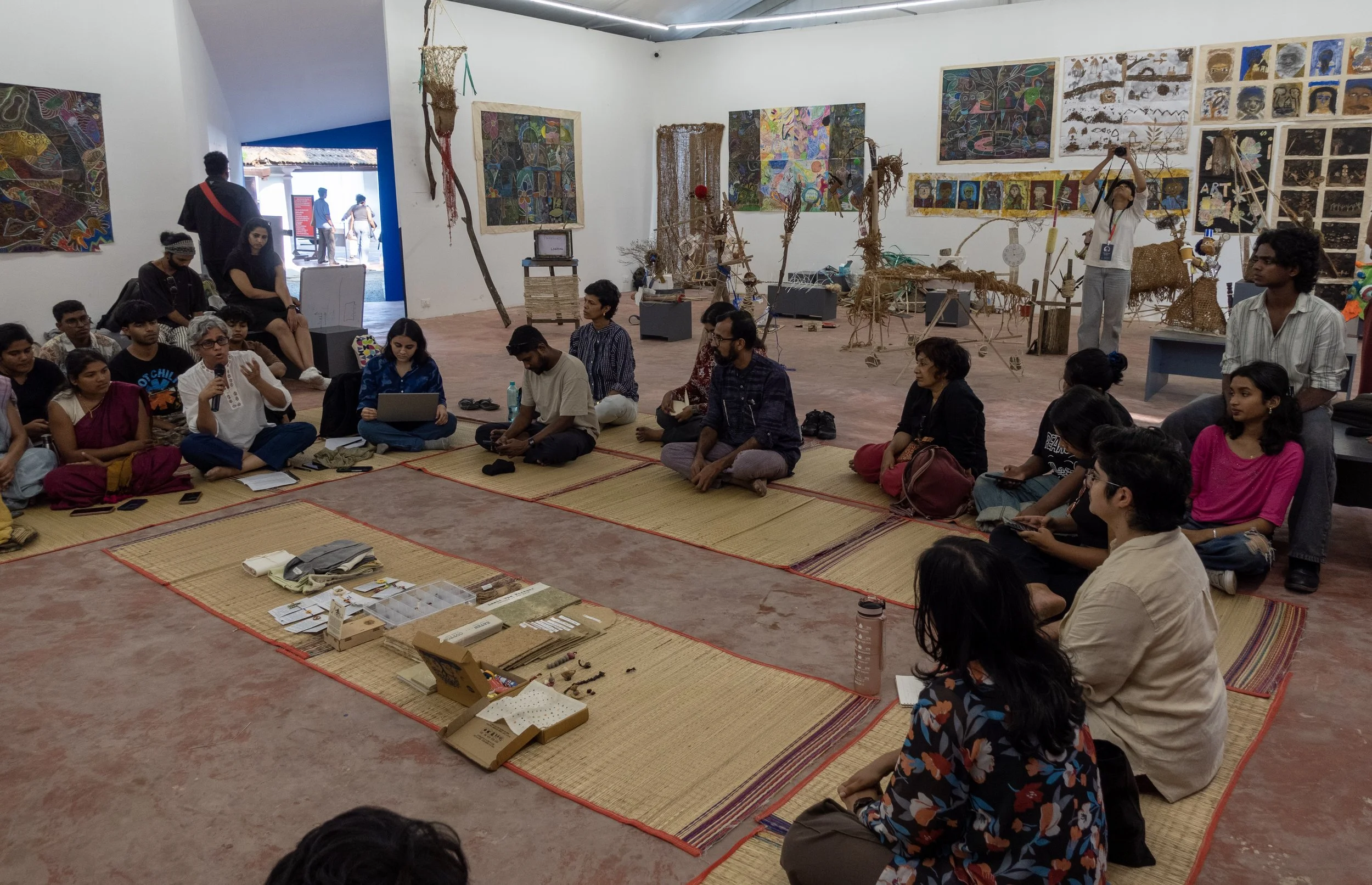
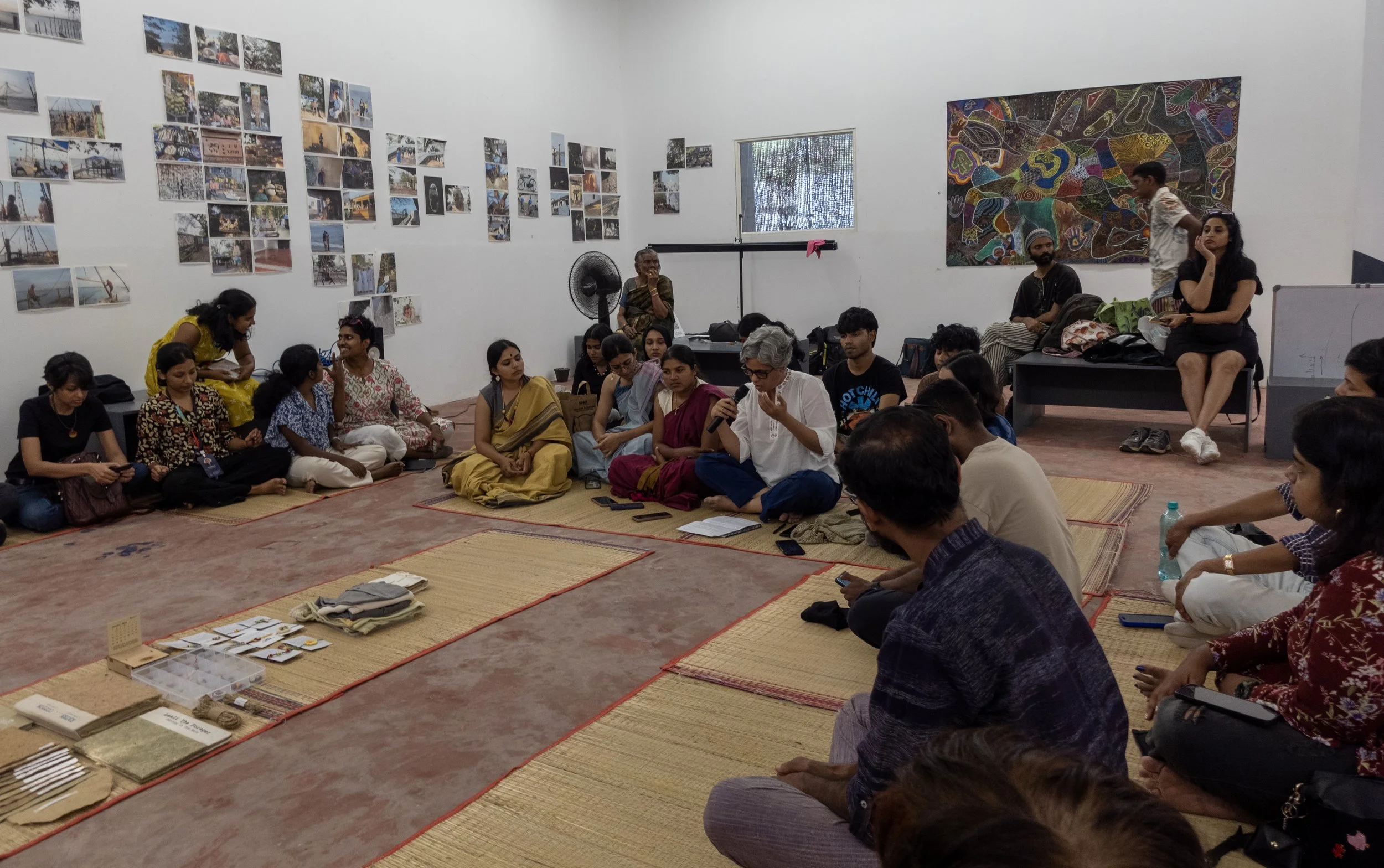
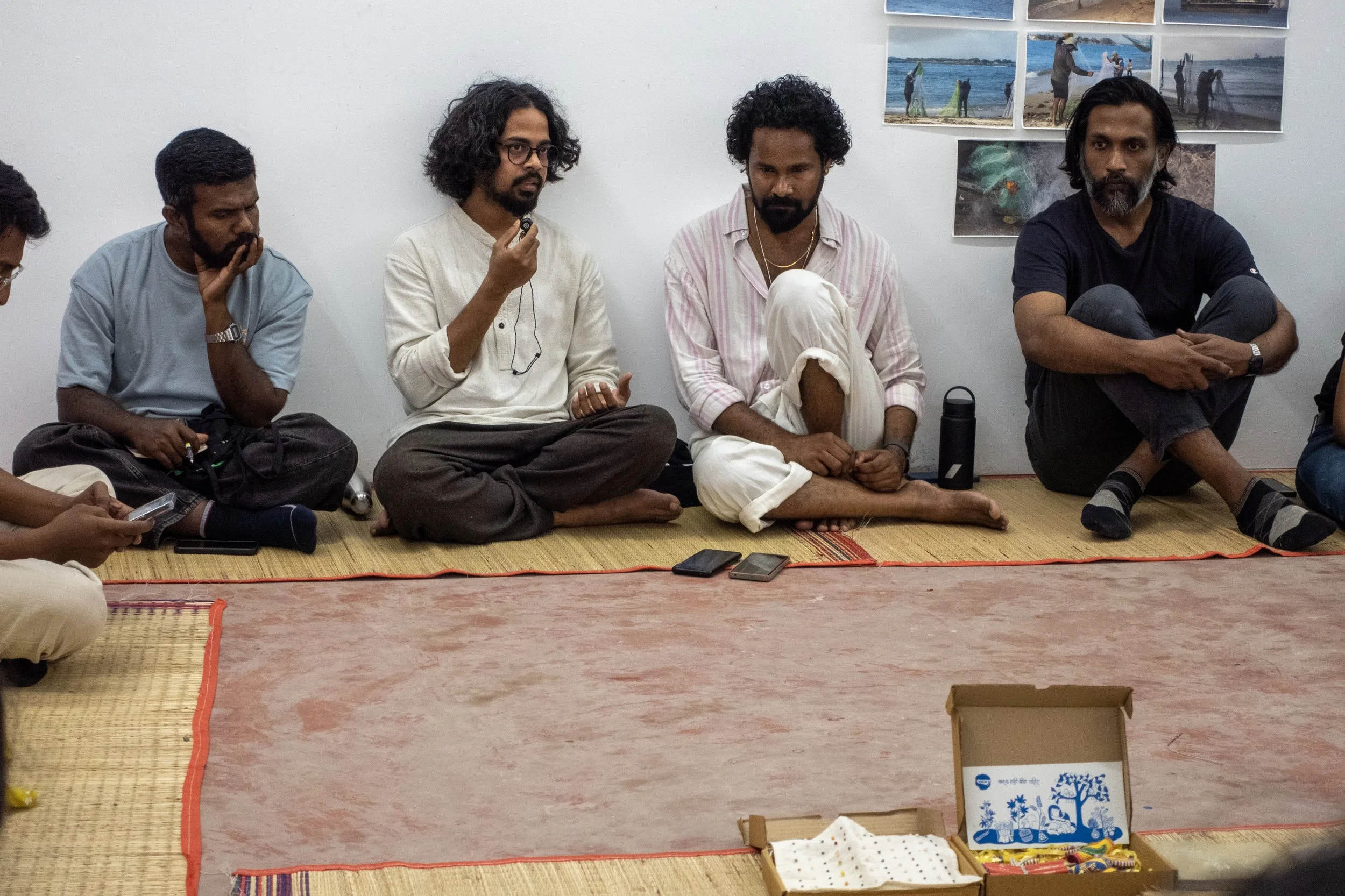
The coming together of the artists and collective also gave us the occasion to host an open circle conversation on the way they consider materials as active agents for conscientious futures. They delved into what materiality means to each of them, the journeys undertaken by materials, and their changing relationship with them. By mulling over keywords such as ‘studio’, ‘site’, ‘field’, and their fluid contours, the artists unpacked their respective sites of inquiry and choices determining acts of collecting, foraging, and production, to understand how we record, perceive, and attend to the processes of the fields we inhabit — over seasons, uses, and changing policies. As moments of encounter, belonging, and otherness were shared, the conversations foregrounded the need for reading the interaction between nature and culture, body and space, the organic and the synthetic in a continuum. In this space of recollection and re-evaluation, we came to terms with the psyches governing consumerism — its limits, excesses, and impacts — while also seeking forms of regeneration and reciprocation, and delving into the potential of community action, indigenous knowledge, and alternative spaces of learning.