We will have always seen more than you try to hide | A workshop by Nupur Mathur
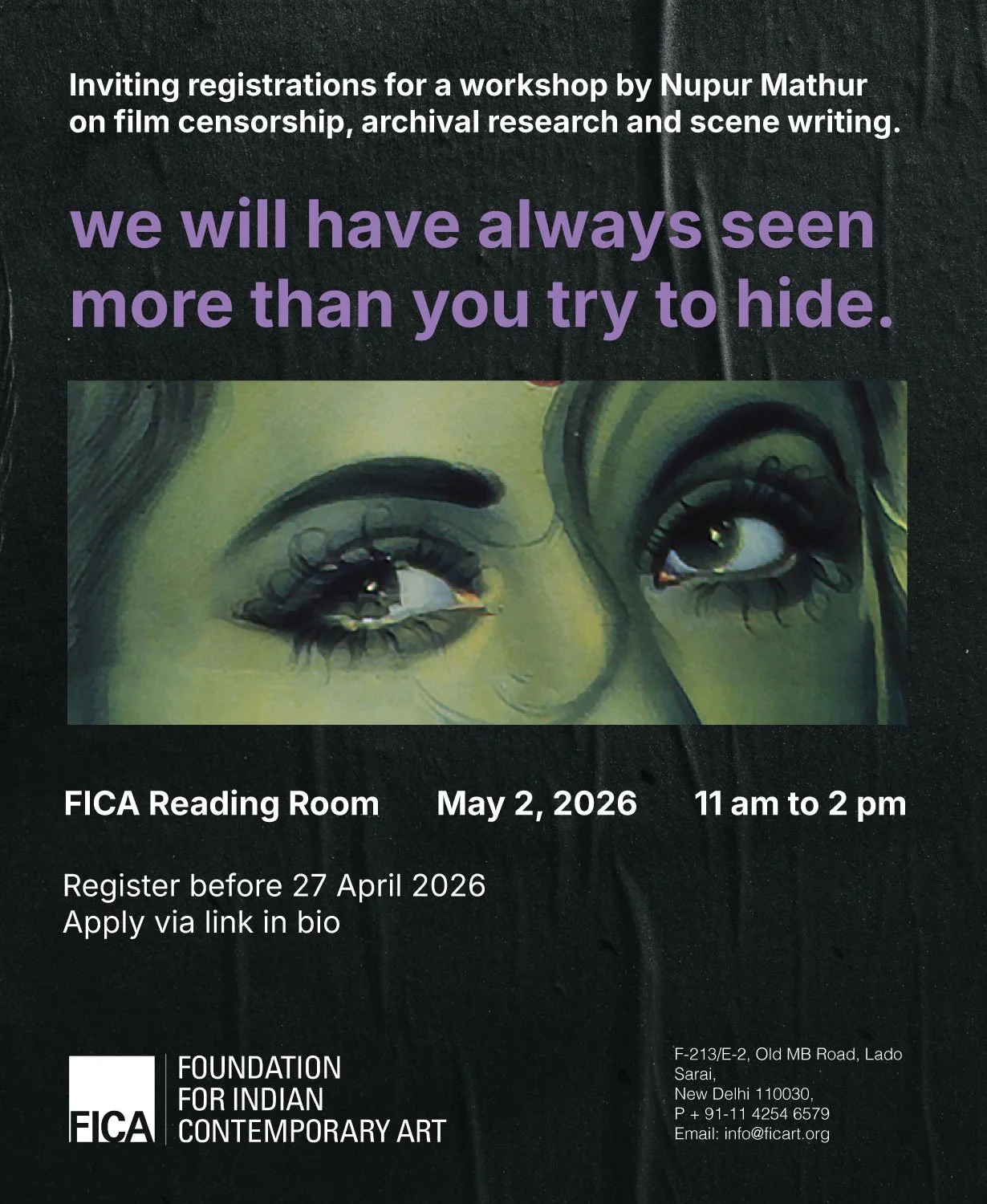
A participatory workshop of collective reading, scene writing and discussion to activate censored film scenes drawing from archival research. The workshop initiated and led by artist researcher Nupur Mathur, asks us to encounter and make our way through the archive, to witness it, disrupt it and see it as not only a hegemonic site of absence, but one that also produces its own silences and potentialities. Together, we will read scenes out loud, invoke our cinematic imaginations to write new scenes, and intervene in the patriarchal bureaucracy that determines what the ‘nation’ can or cannot see.
The workshop is part of an ongoing research project that examines censorship and how it intersects with our material realities, especially at the intersections of gender, class, caste and religion. The artist visited district offices of the National archives in Jaipur, and the National film archives in Pune to find and collect research materials that form the starting point to engage publics with. Central to the artist’s political orientation is a desire to push back against the ideological fantasies that structure the national imaginary in mainstream cinema. The project seeks to draw connections between the past and the present, and explore what censorship and desire mean when embodying a world that increasingly cannot be defined by nation states.
Workshop Date: May 2, 2026
Time: 11AM - 2 PM
Venue: the FICA Reading Room, Lado Sarai, New Delhi
About the facilitator :
Nupur Mathur is a research based artist that creates image, sound, and text based encounters with colonial legacies and hegemonic systems of regulation in the form of films, printed matter, workshops & mixed-media installations. With tenderness and humor, she explores how instruments of control—such as immigration law, gender norms, or state sponsored censorship—intersect with our material realities and collective imagination. Her research draws from institutional archives, movies, social media, journalism and artifacts of public memory