These Liquid Lines
Exercises in memory, attunement and movement
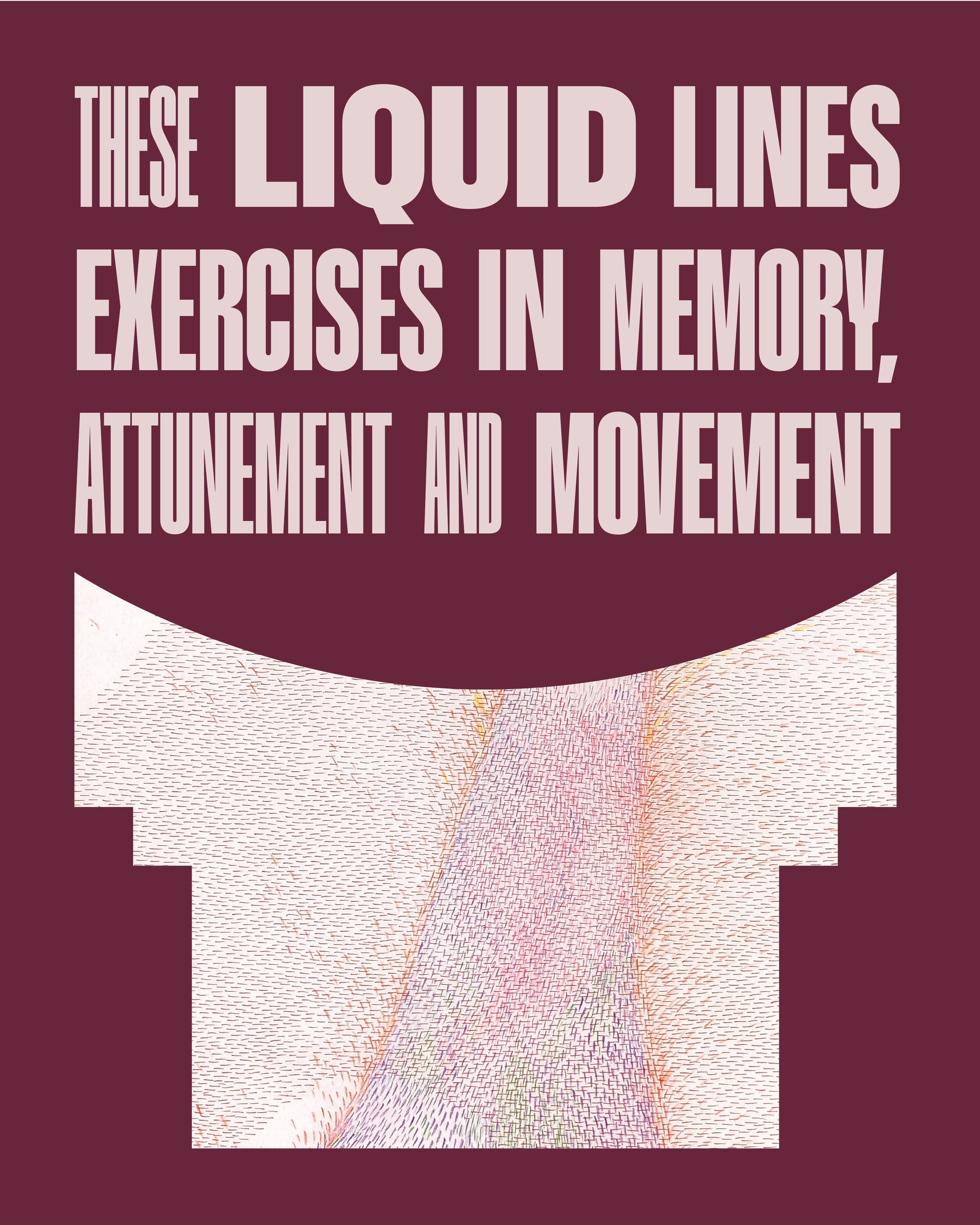
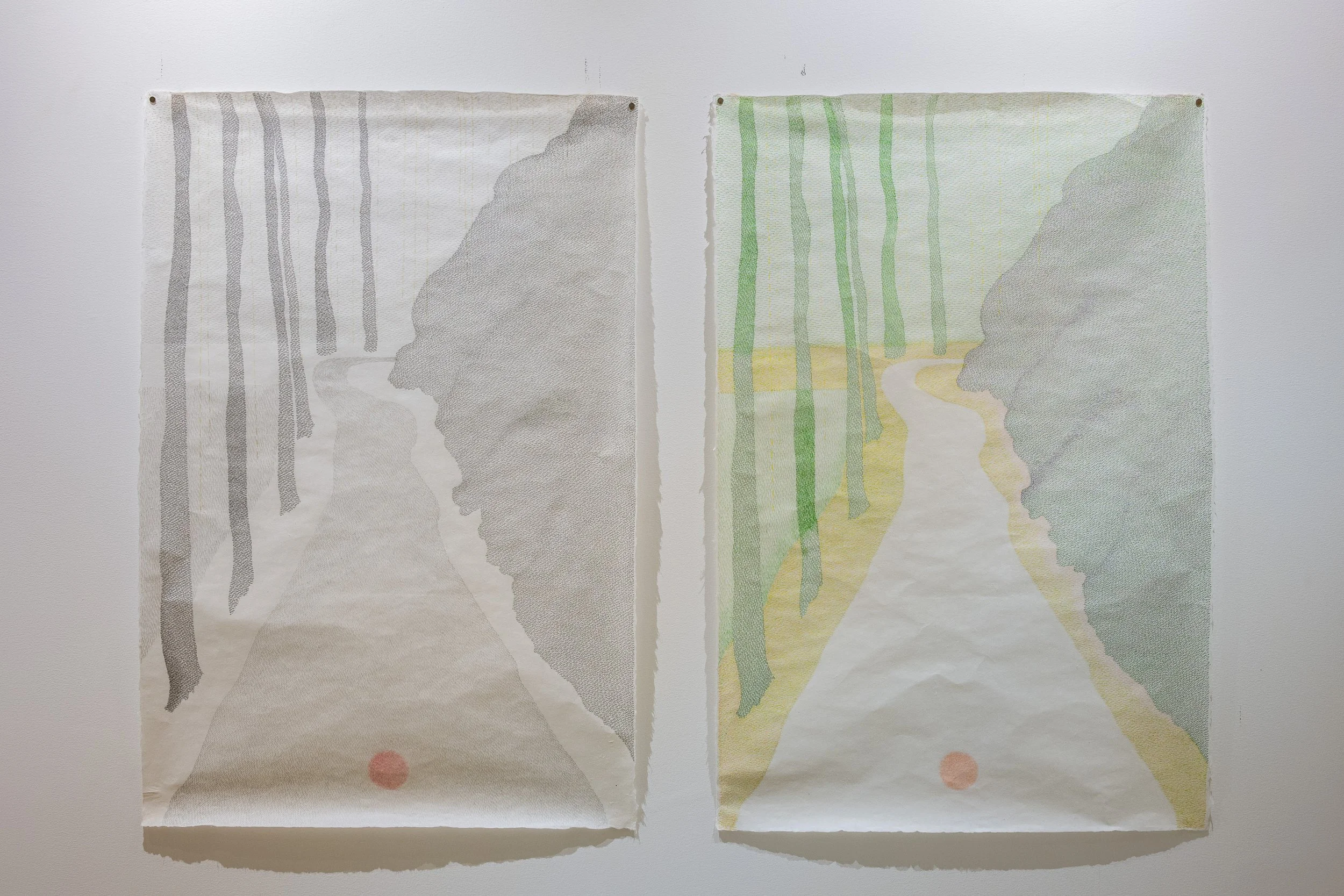
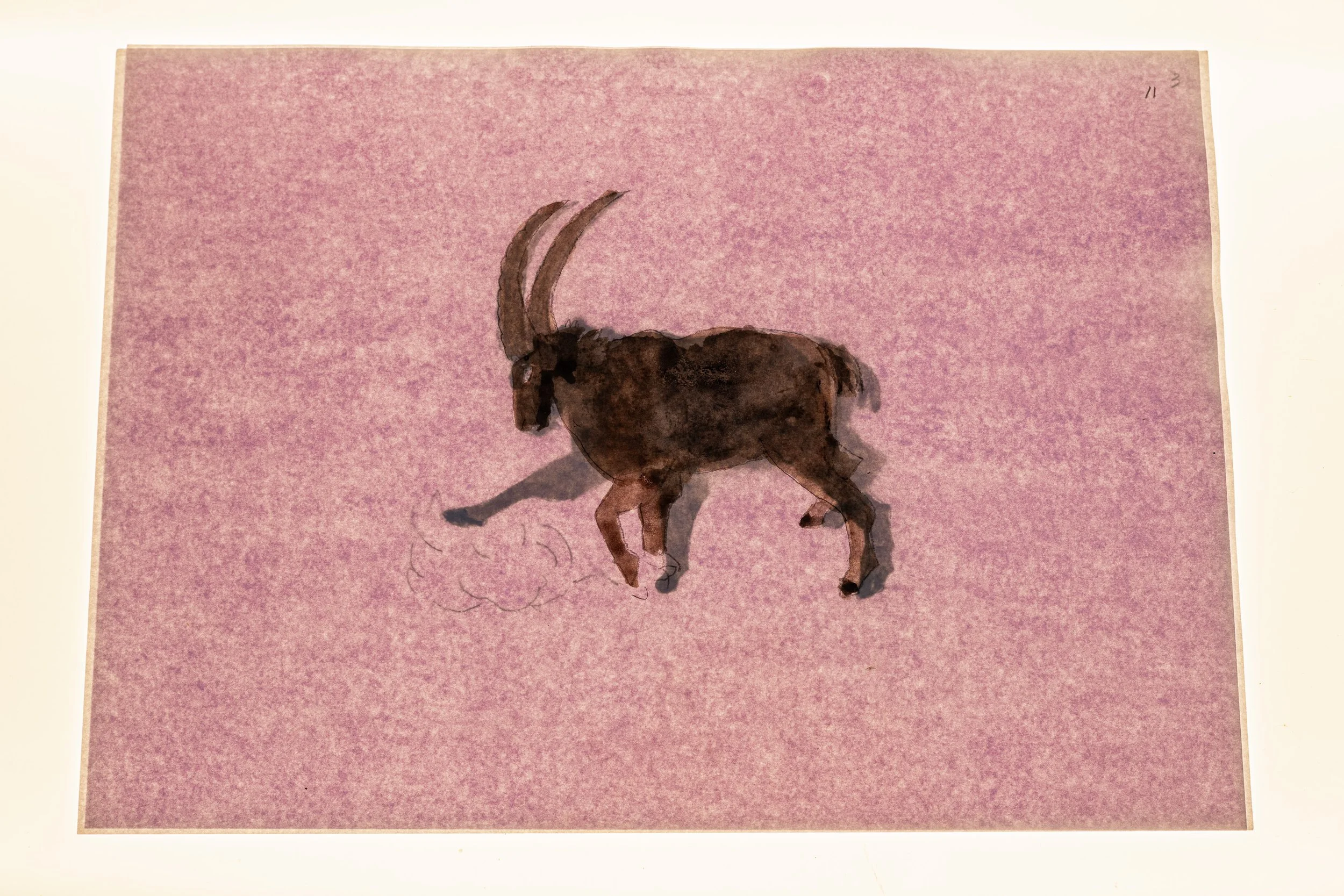
Image credits : Arieno Kera, "Tei mu Kijü," 2024. Pigment liner and colour pencil on paper
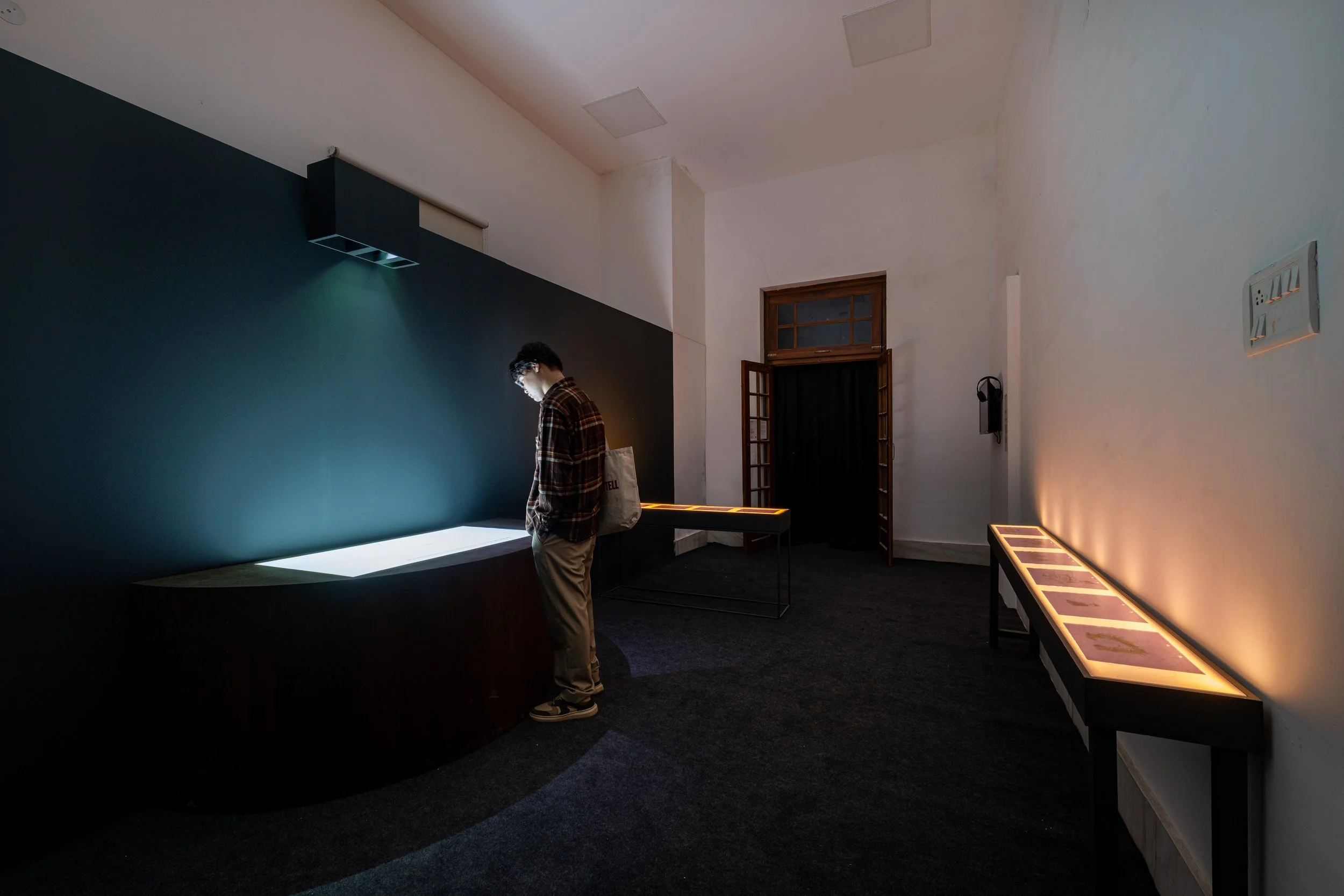
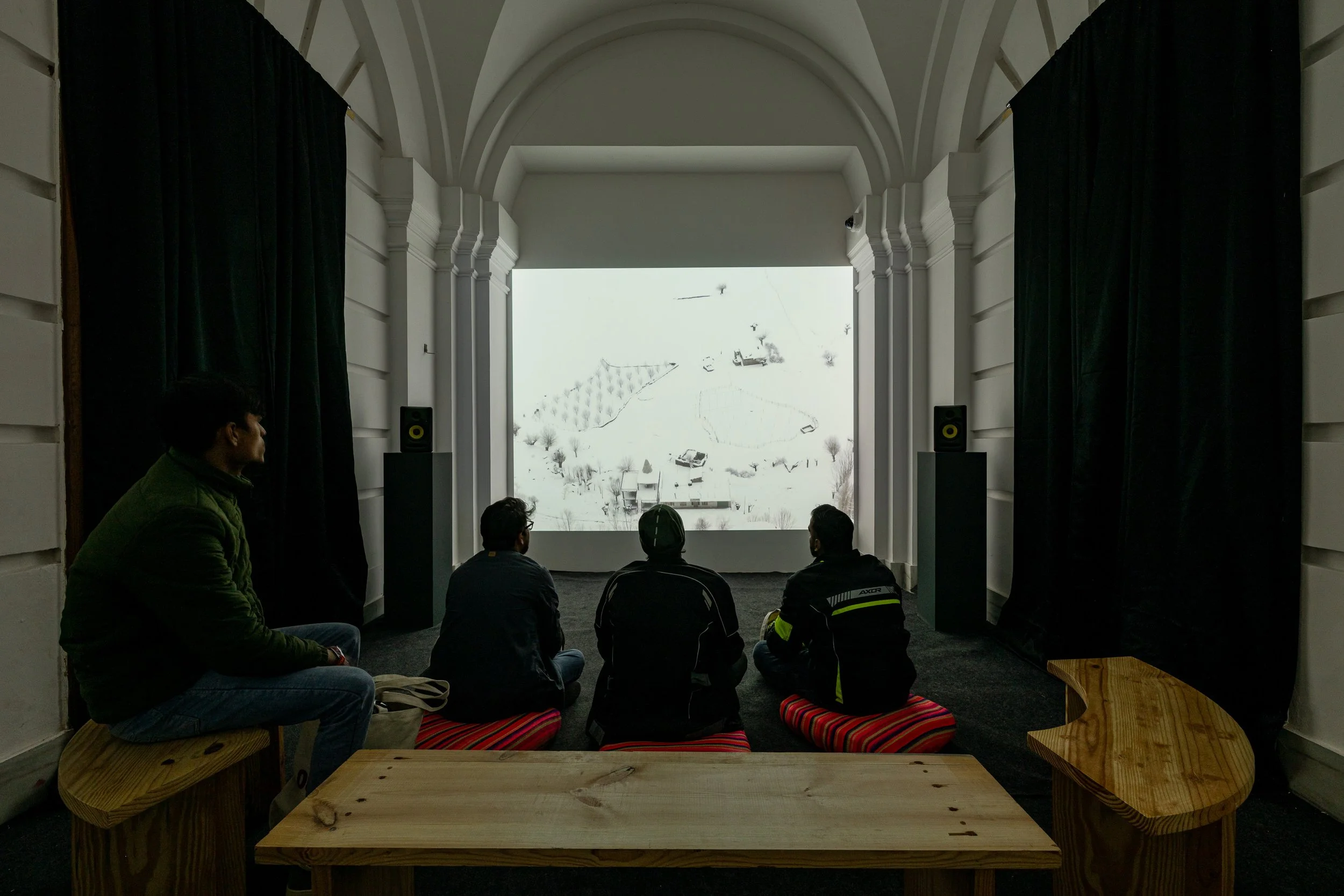
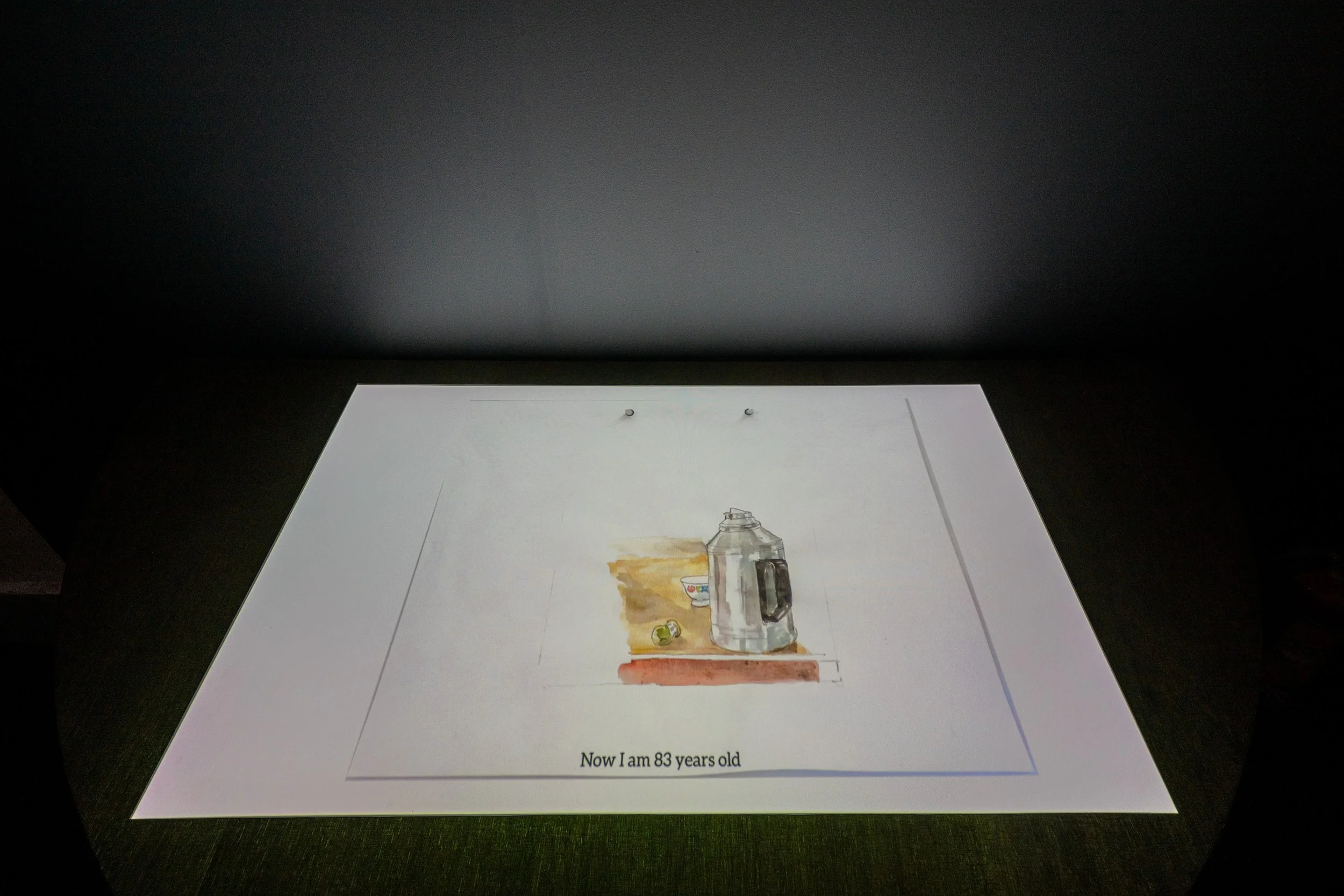
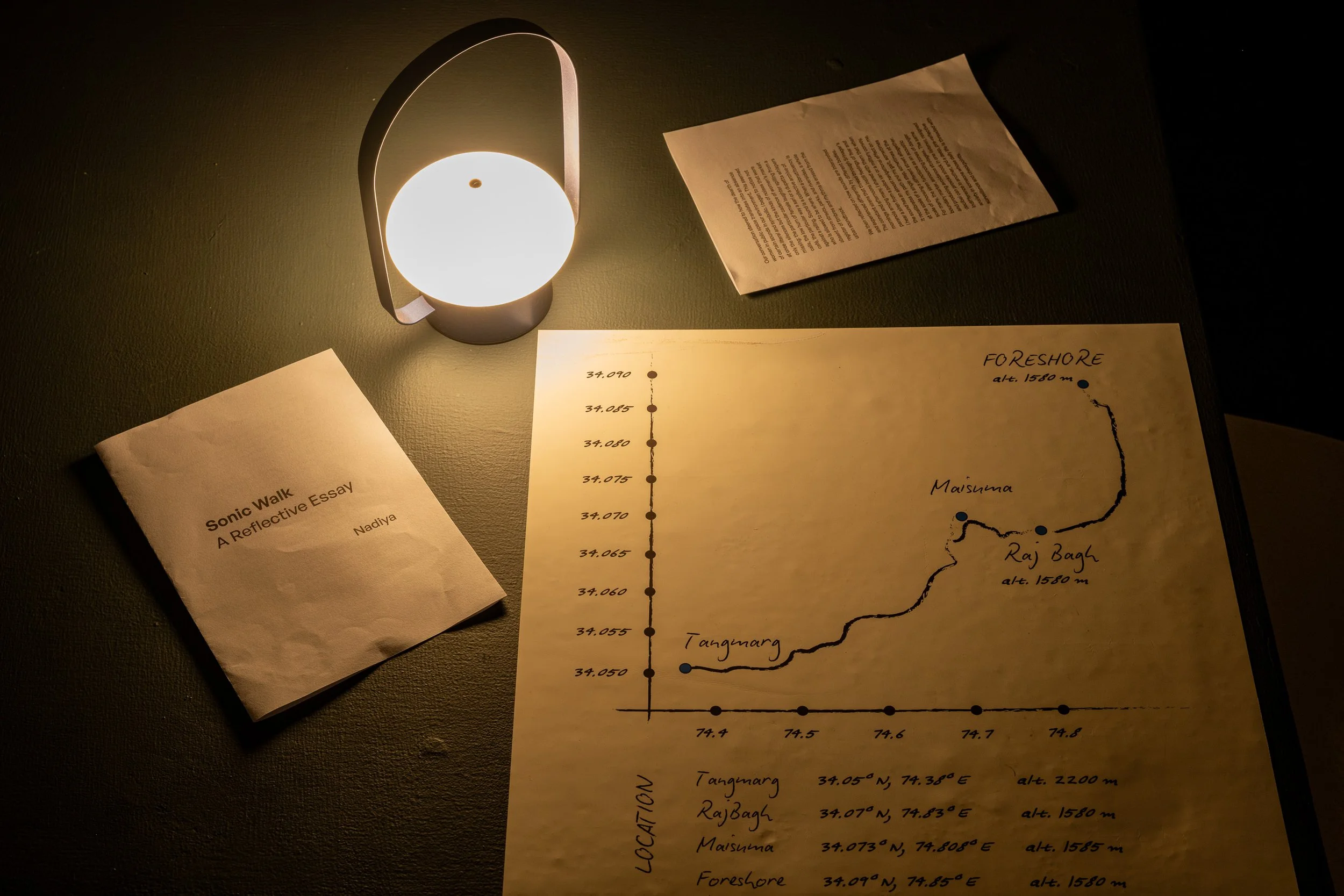
An exhibition presenting the projects and processes of the 10 fellows of The Himalayan Fellowship for Creative Practitioners 2024
Participating artists: Arieno Kera, Kesang Thakur, Lalsangzuala Tetea Vanchhawng, Sagar Saurabh, Thoudam Victor Singh, Tsetan Angmo, Veecheet Dhakal, Wasim Ashoor, Zainab and Zeeshan Nabi.
4 - 10 December 2025
at Travancore House, New Delhi
as part of Journeying through the Himalayas
an intercultural showcase by Royal Enfield.
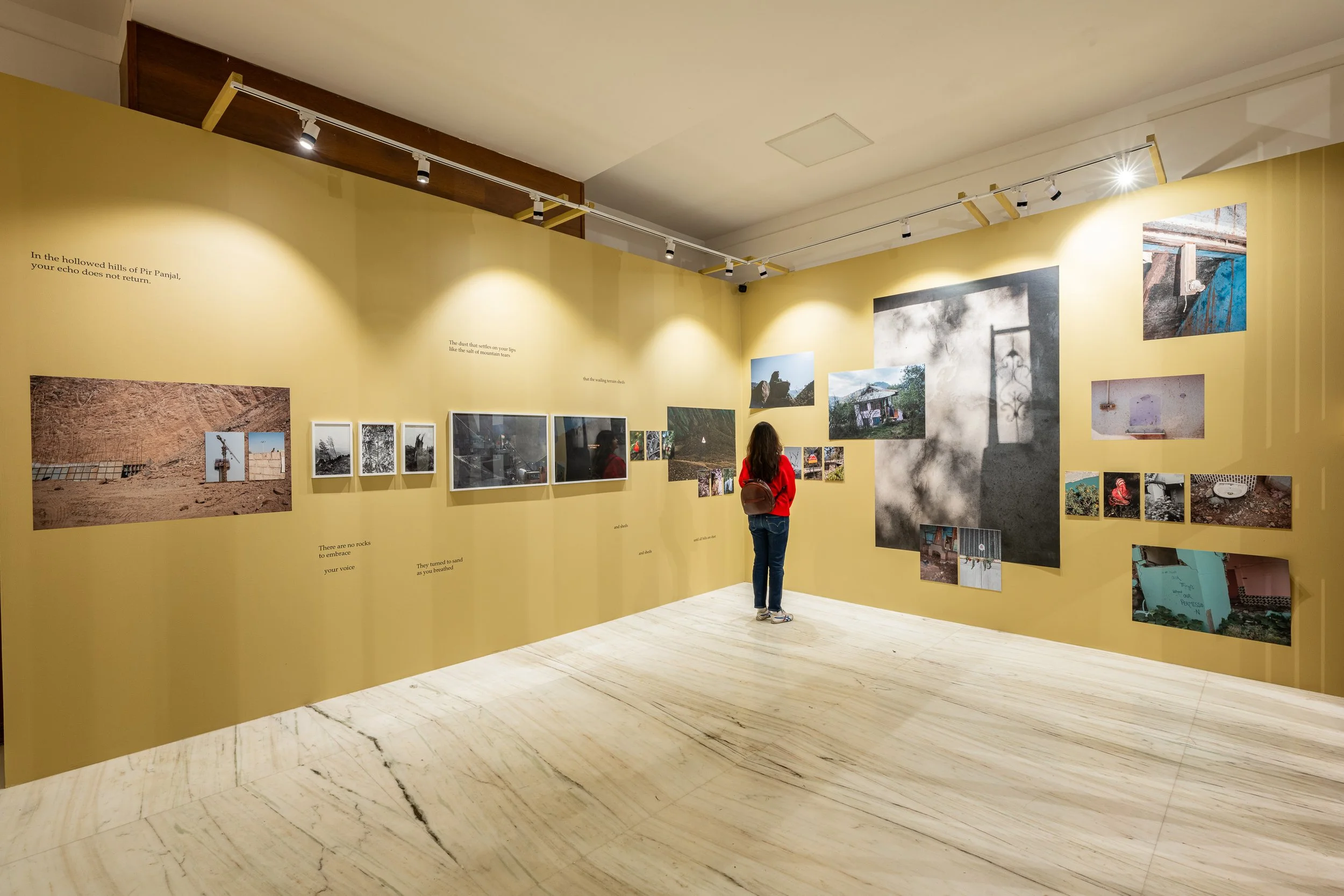
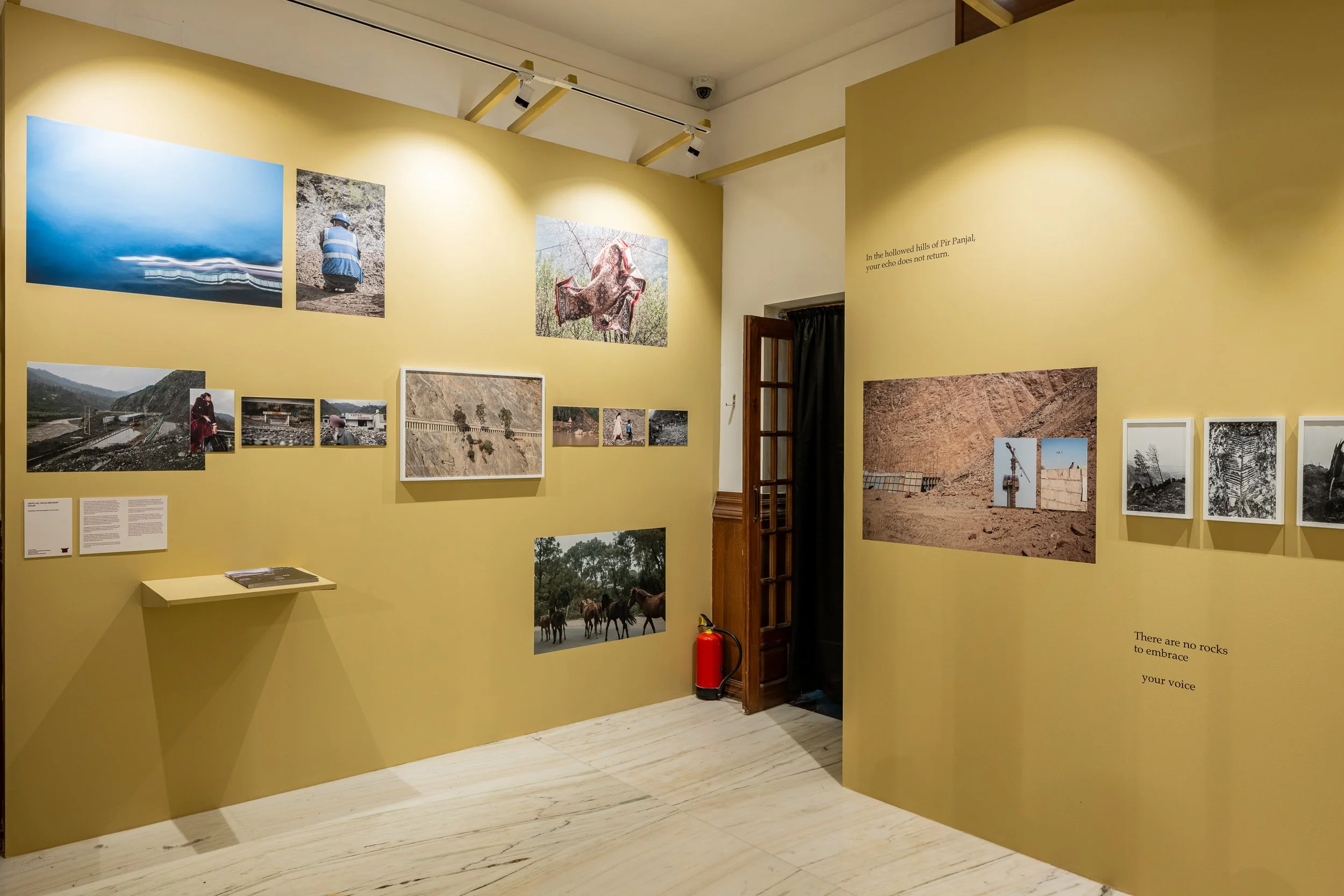
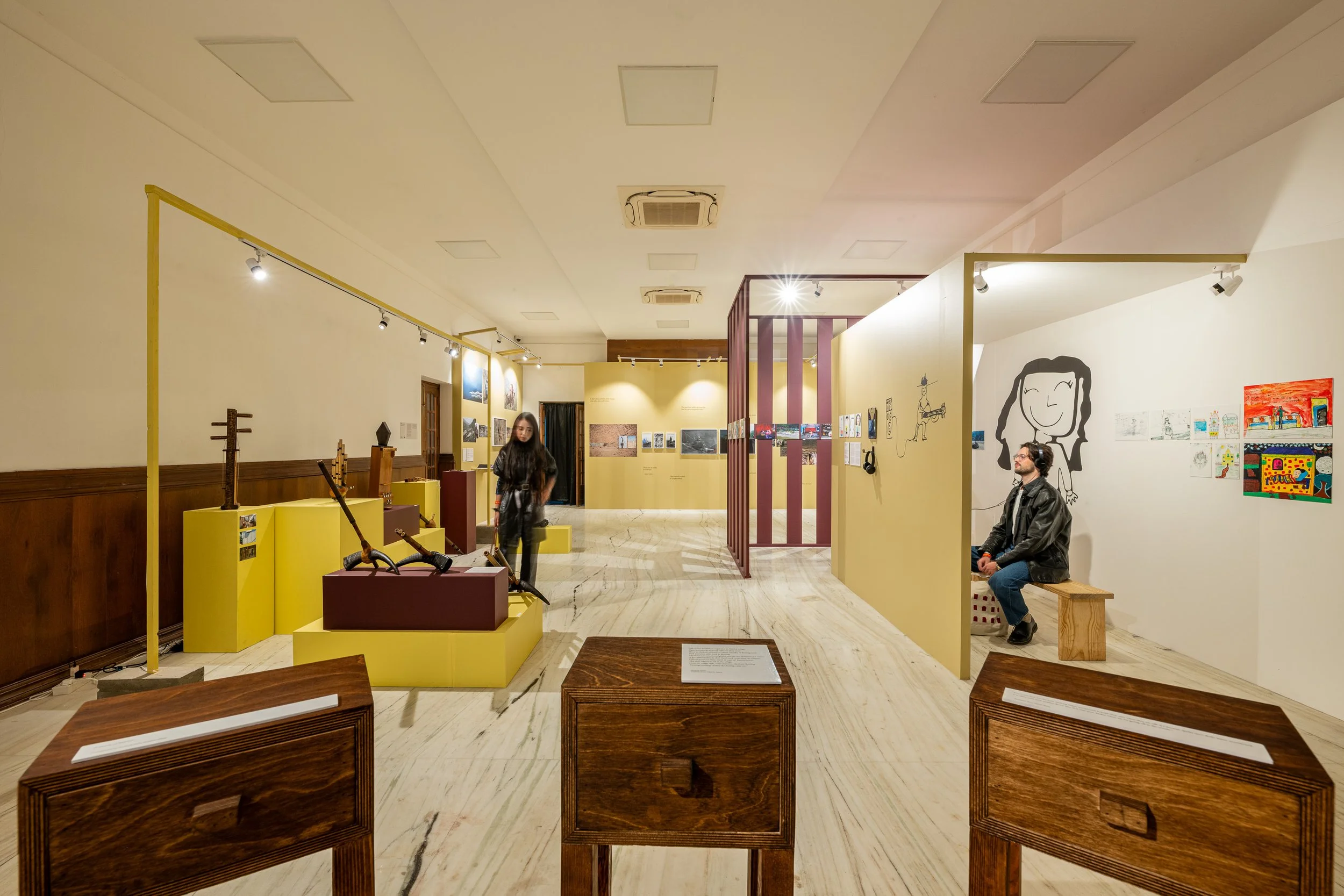
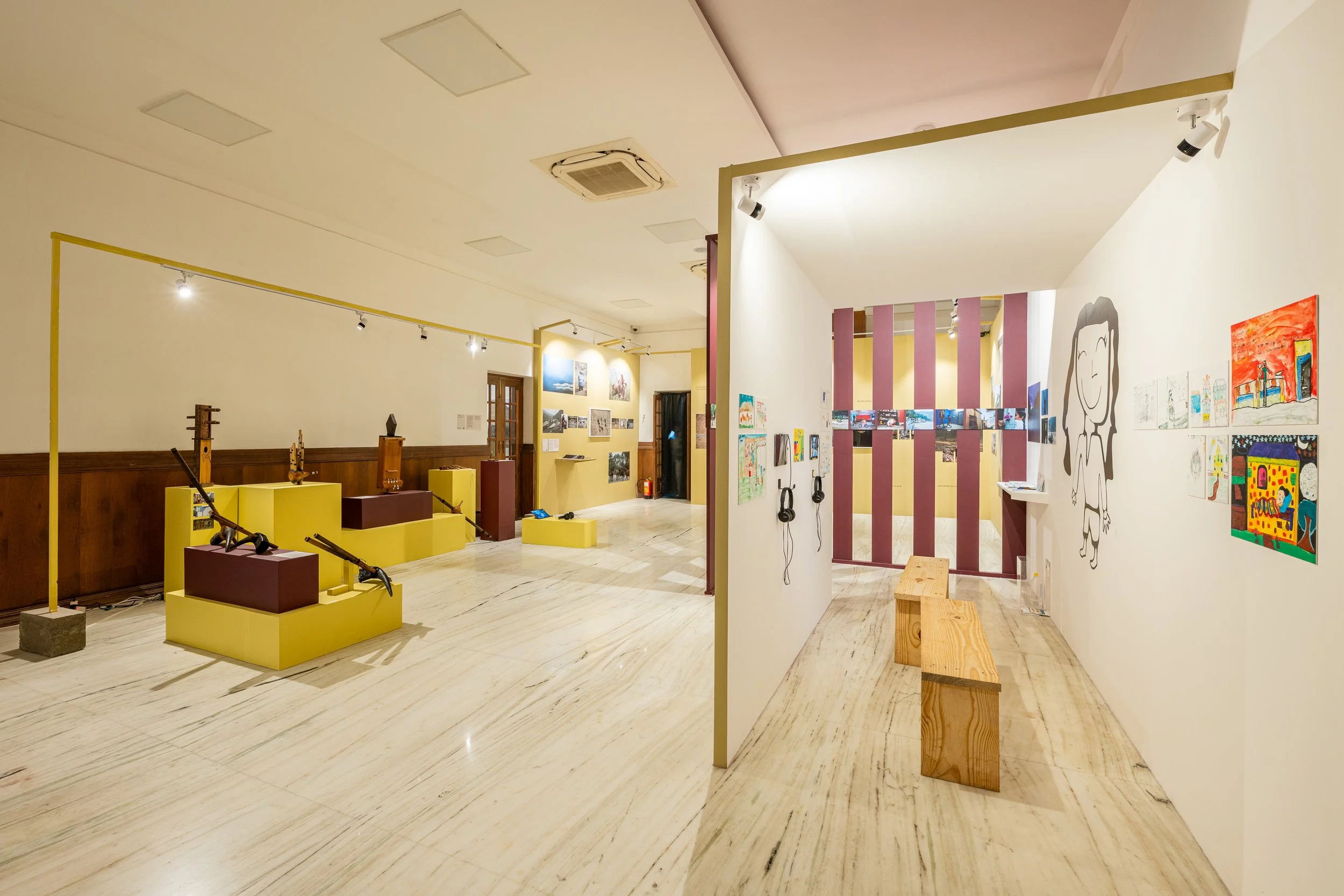
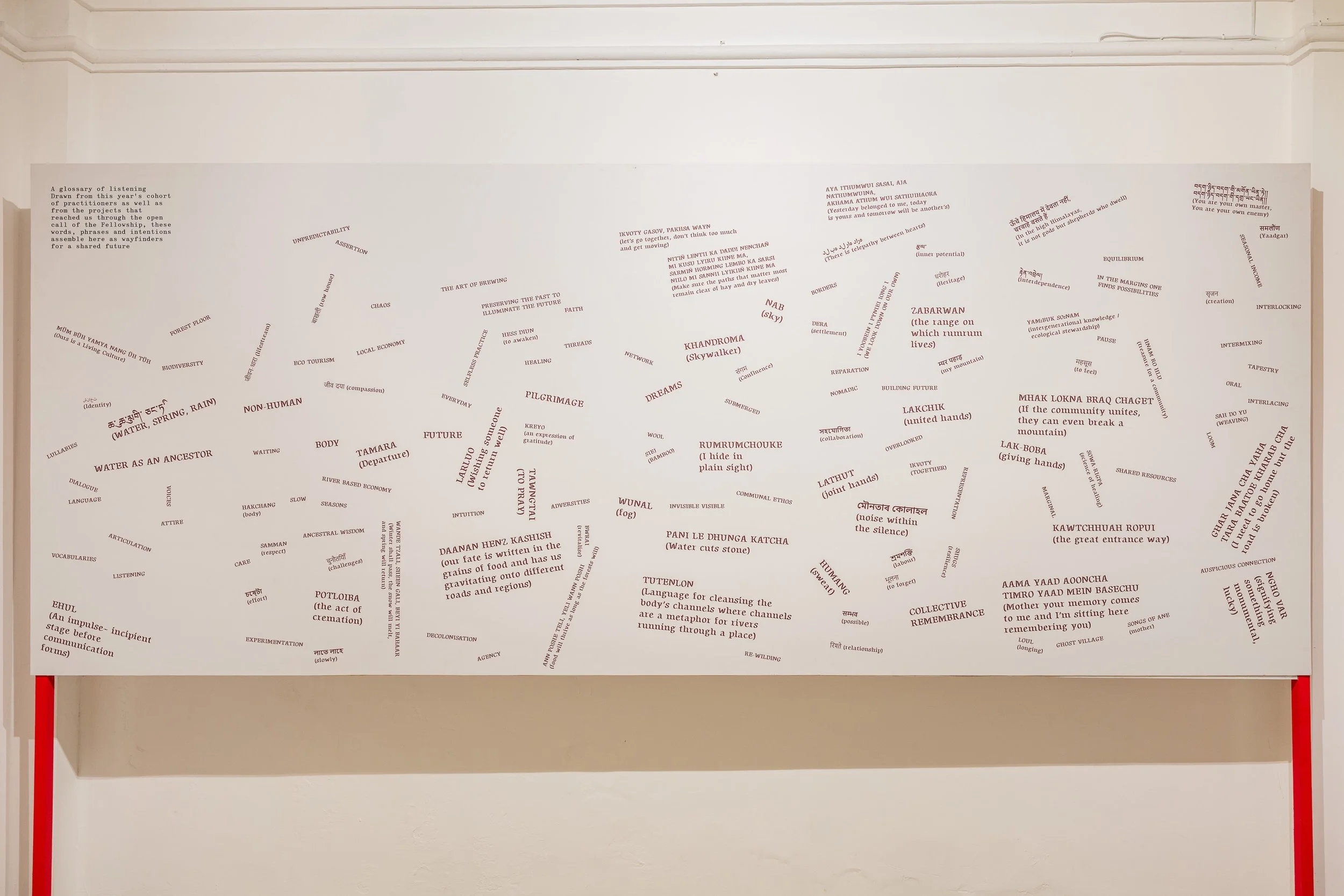
Within this edition of the Fellowship, we were invited to listen to the modulations of shared paths and the luminosities they ferry forward. The landscapes we gather with here unfold through many glossaries and refrains: sonic currents, haptic vocabularies seeded at land’s edge and memory’s tide. Each project arrives at a cusp—a meeting point of intensities, where every telling holds many tellers, and every teller is a verse unto themselves, tending to the echoes of acoustic memory that plant something within us.
Listening is the medium and the message. The works here shape propositions towards making with care, the ritual of the everyday, and the dimensions of community and home. They move away from idealisations, and assemble a vibrant languaging of our evolving present. They sound out utterances of the future, marking disobedient routes, contours that slip and surge: onward, away, together. Always journeying.
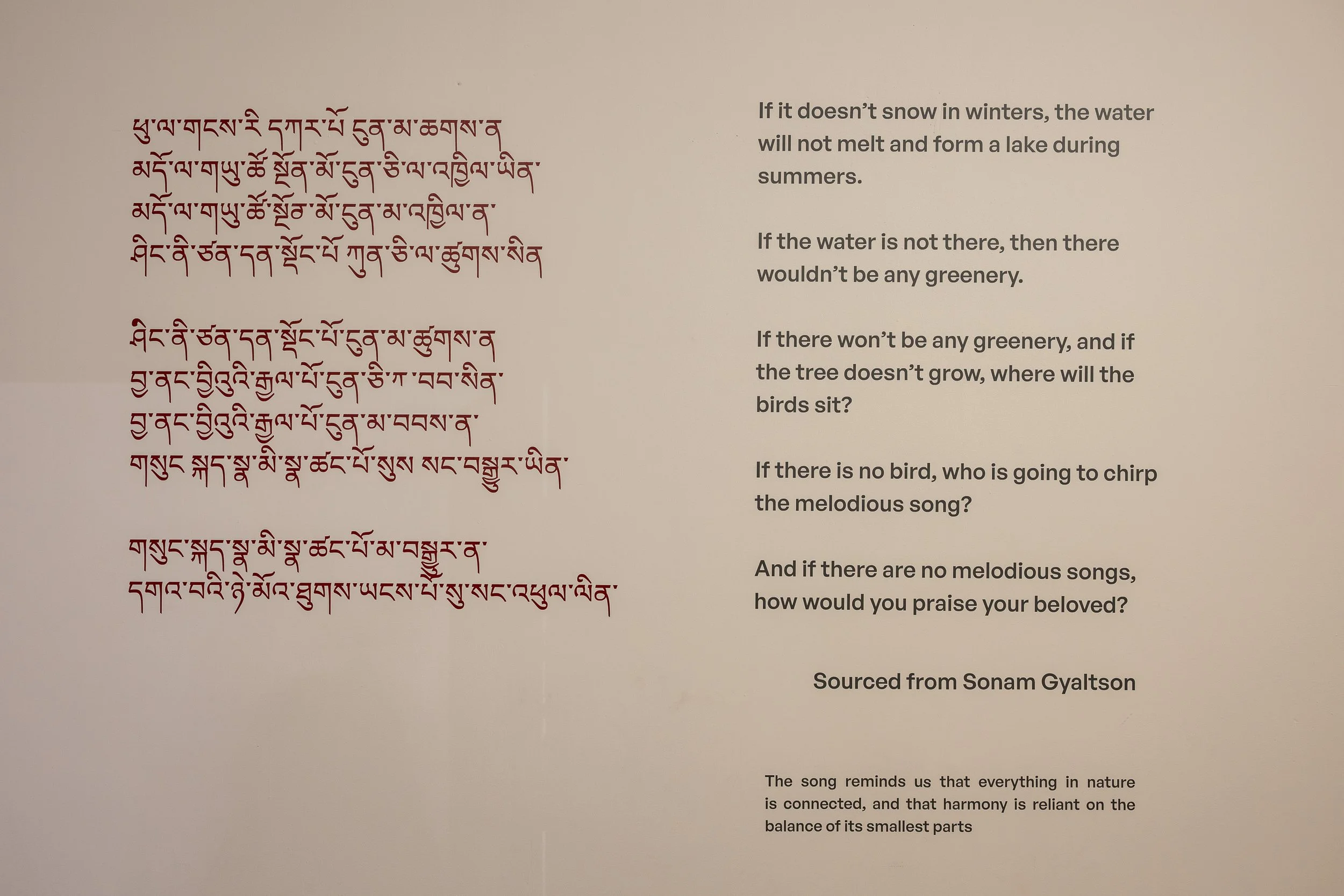
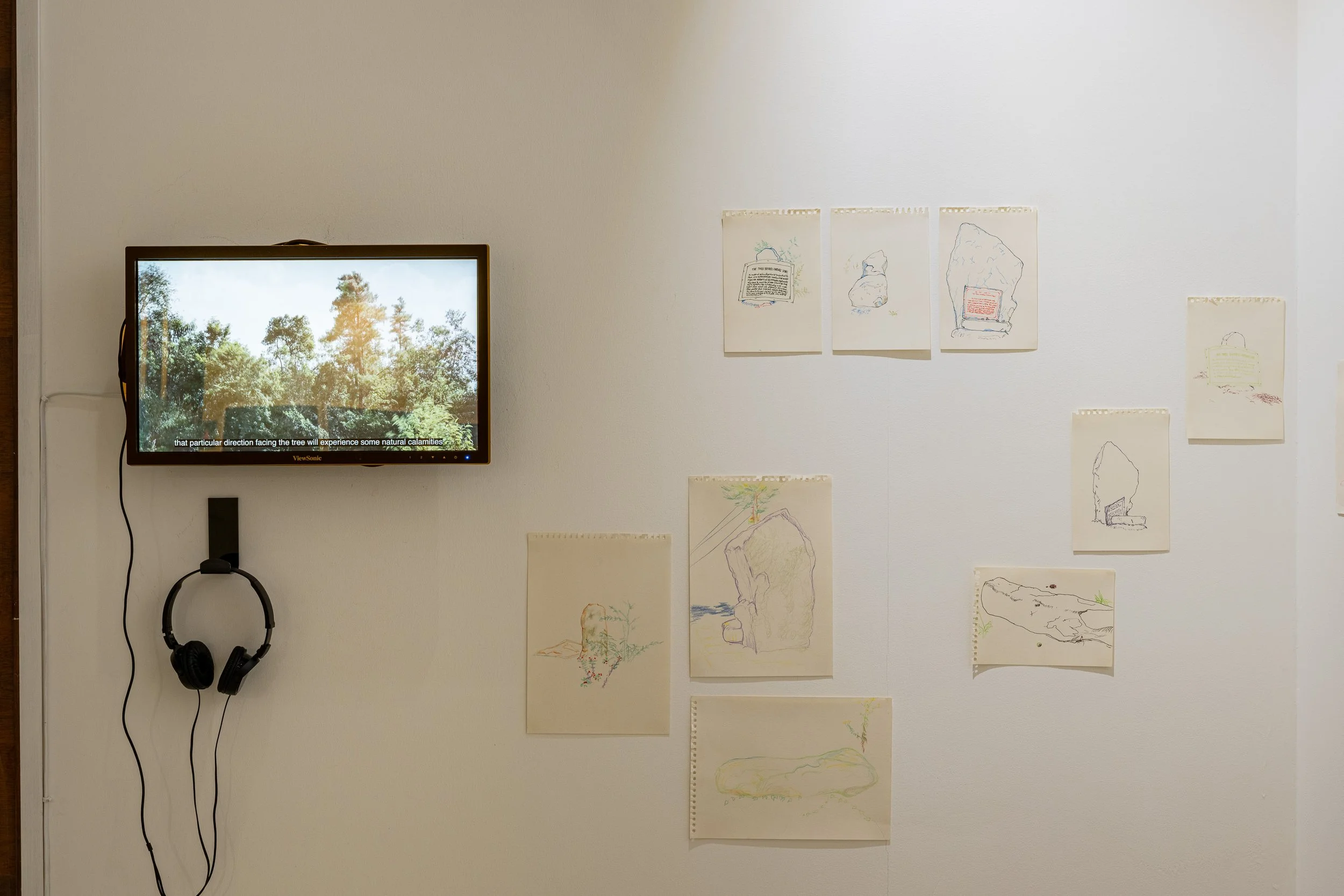
We move as we do from gatherings under charasu marabu and chetibu kaji in Kohima; we walk the river in Geil Khola, sieving sounds of the Teesta Bazaar; we sit with the stones in Turtuk, the mountain groaning, the waters waiting; we scatter with the cicadas, quieter each season in Aizawl; we wait with the hornbills in Silpur. The flood is coming—impending but held at bay by these many-faced, many-limbed listenings.
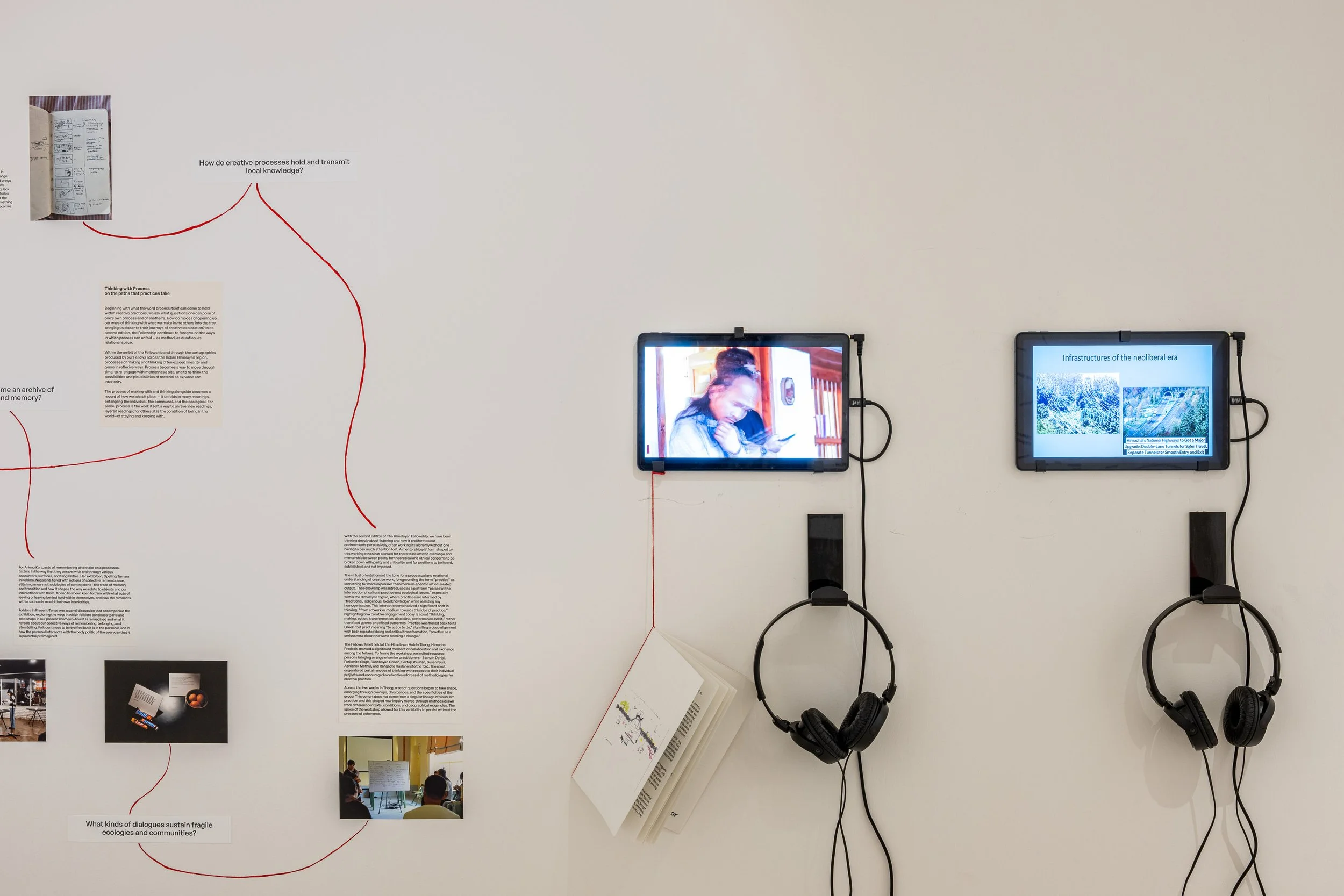
These liquid lines meander through riverine corridors and mountain paths, carried by an attuned sensibility that reanimates memory and the slow work of observation. Here, ways of listening shape lines that meet and lines that drift, opening into new ways of sensing.
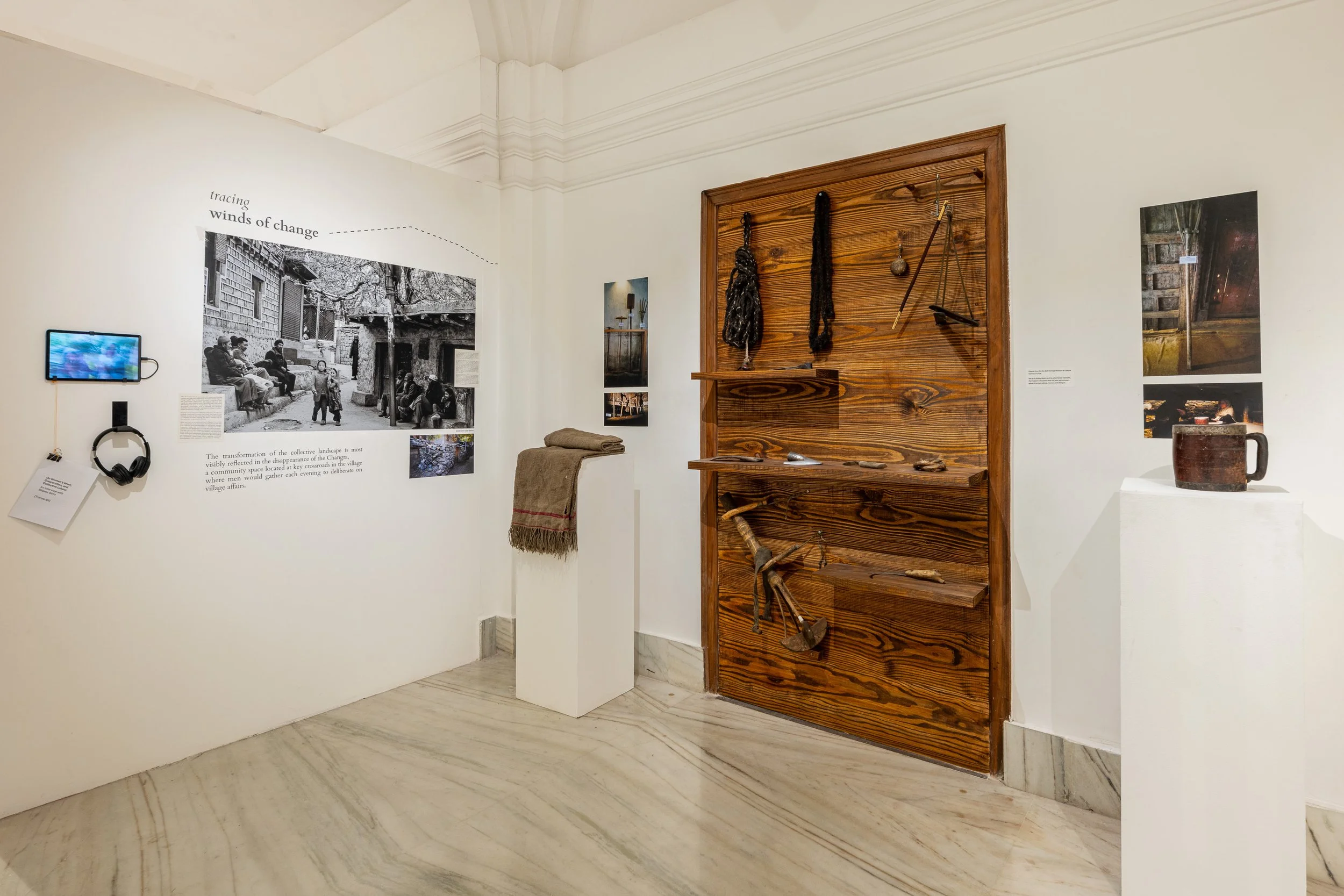
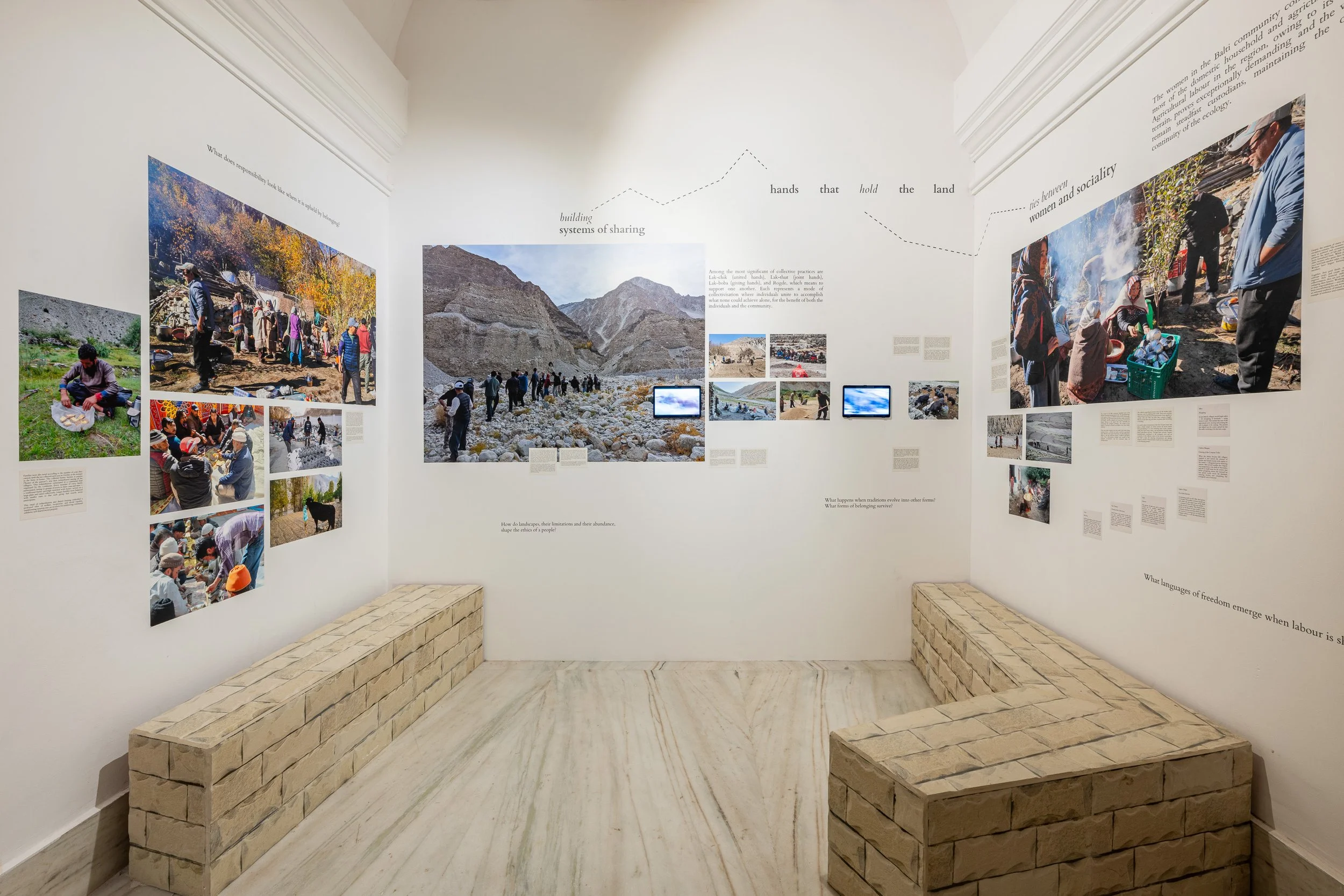
Looking back at our programmes!
Exhibition Walkthrough
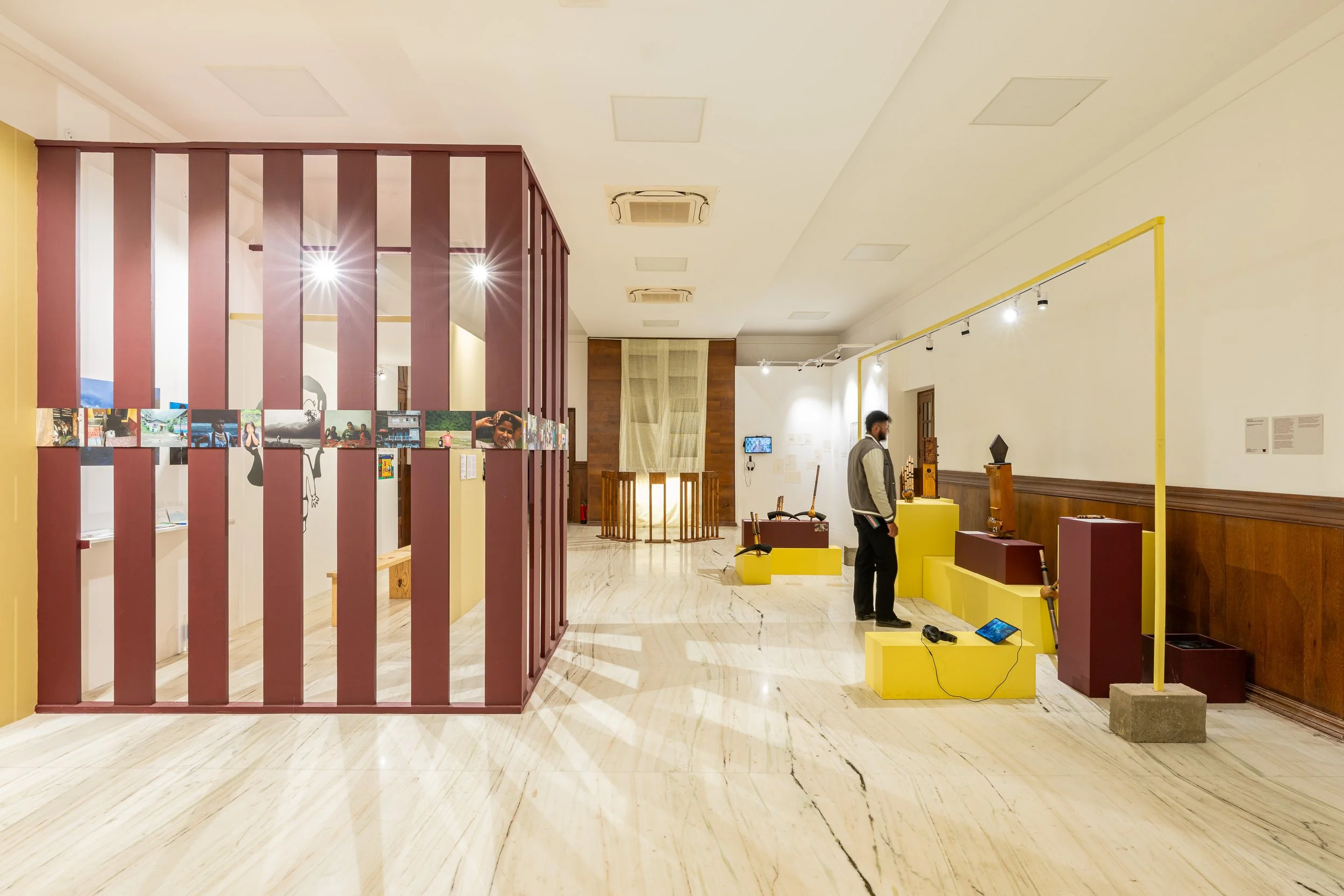
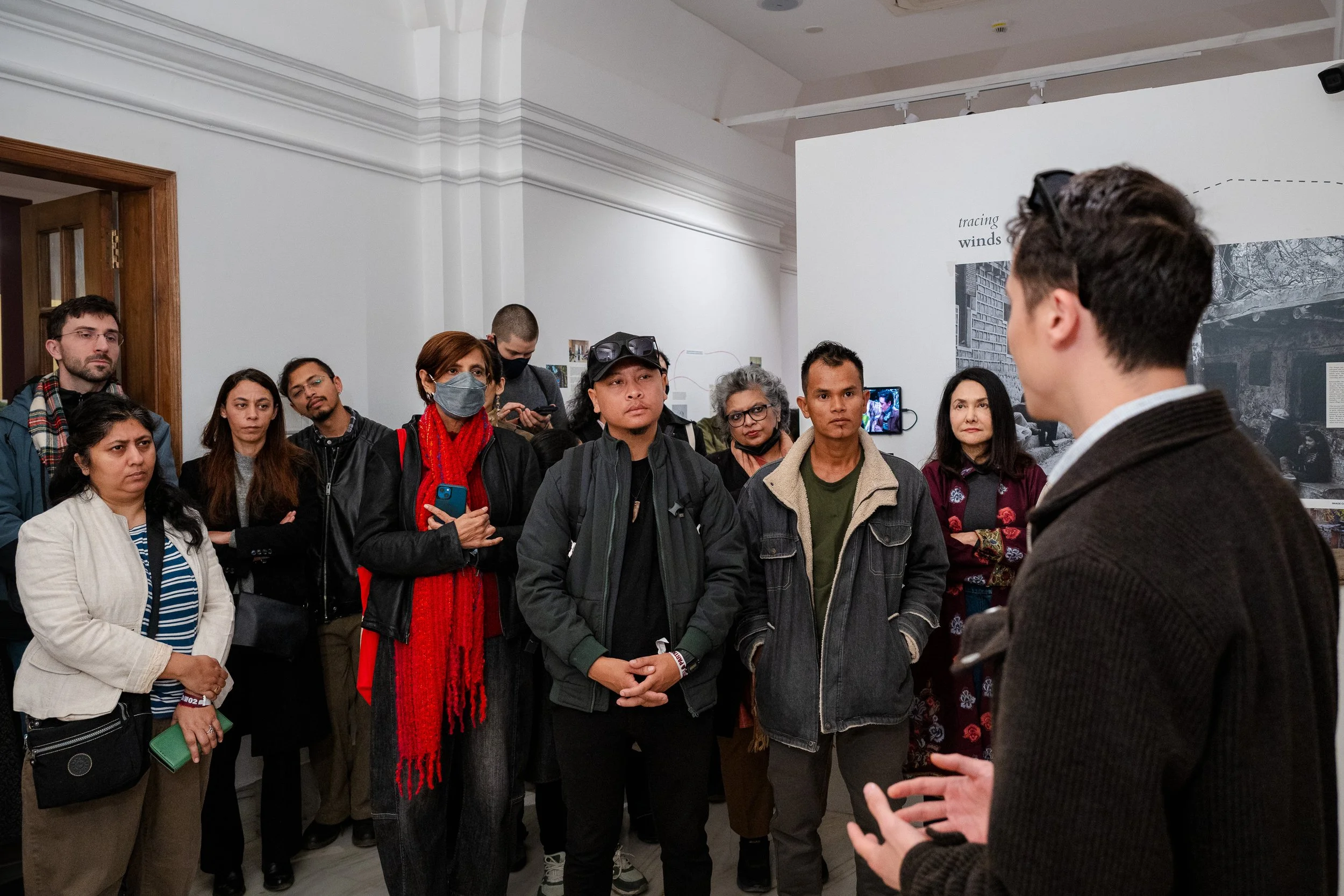
The walkthrough, helmed by the participating artists, activated the exhibition in a moment of dialogue and storytelling, which unfolded as a sharing of people, places, conditions, experiences and processes that brought life to the works presented. The visitors, made up of peers, friends, and practitioners from diverse fields and festival visitors engaged with each artist with great enthusiasm. It was an enriching opportunity to immerse ourselves in the diverse storied contexts embedded within the exhibition, and the potentialities of the works as they will continue to grow beyond THF.
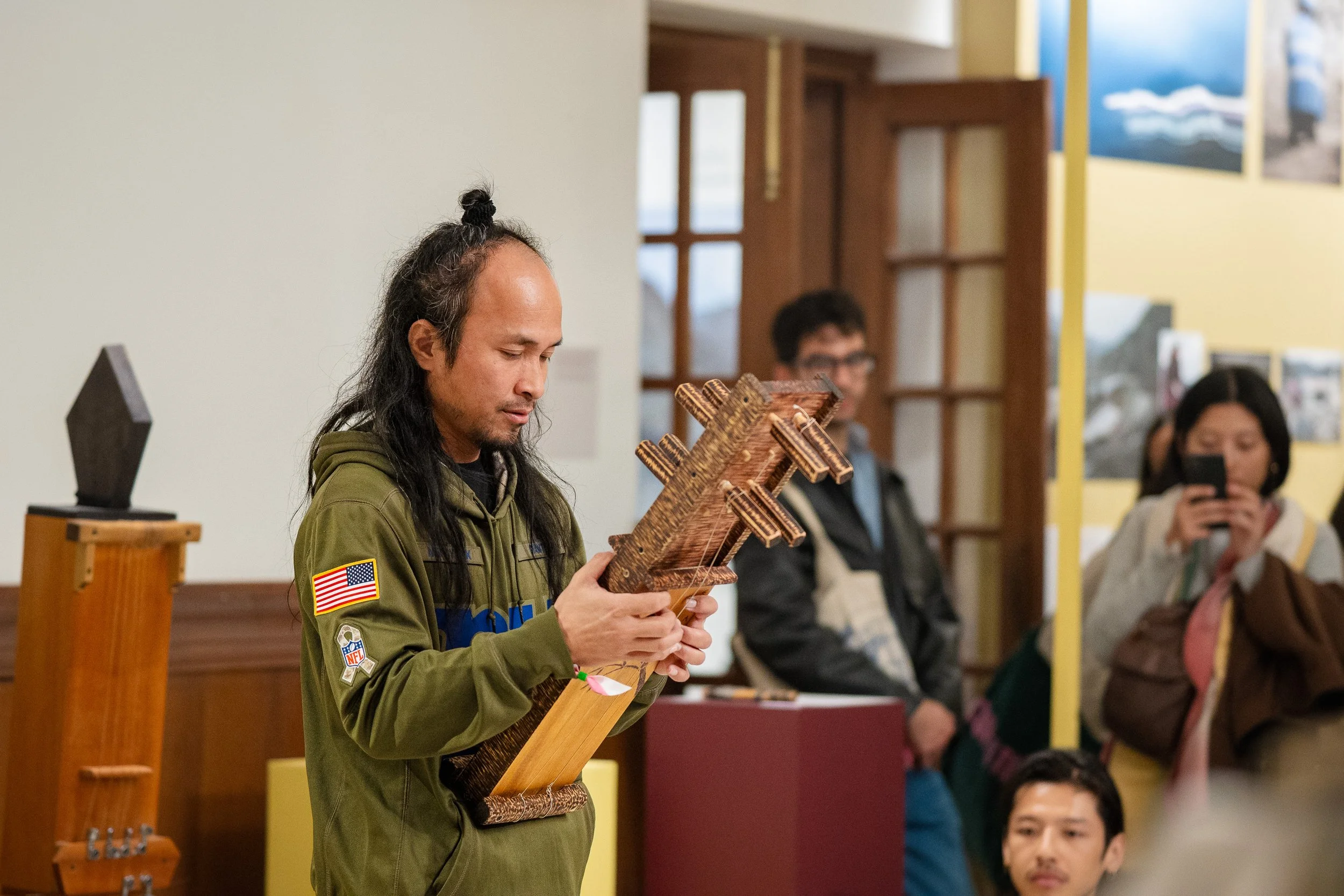
Resonant Futures: The Living Sound of Mizo Folk Instruments
With Tetea Vanchhawng, accompanied by Joshua Sailo and Hriatpuiia
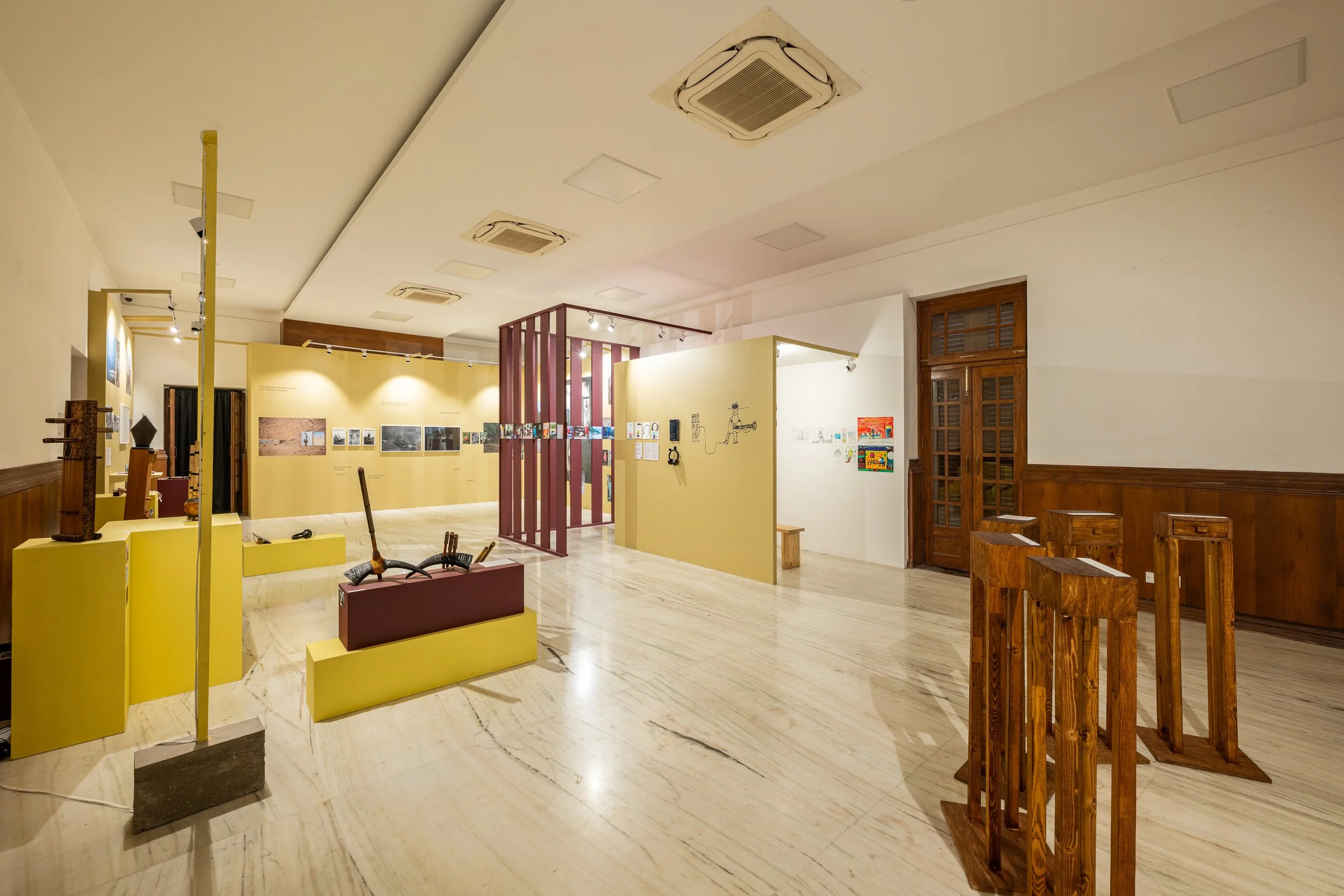
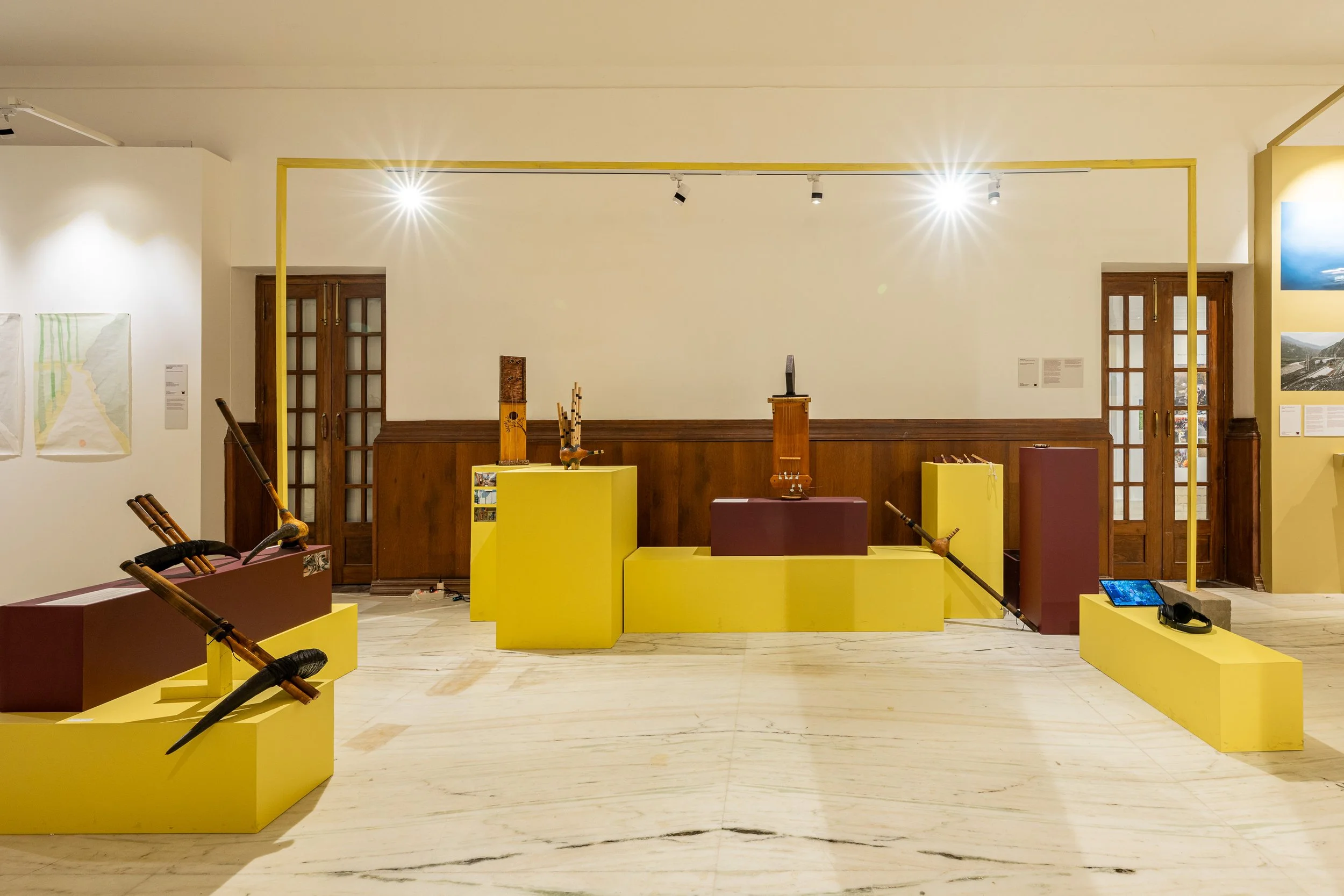
Following the walkthrough, Tetea Vanchhawng engaged the audience in a demonstrative performance of a set of Mizo folk instruments redesigned and exhibited as Ngho Var. One of the instruments that were played was the ngut, which translates to “six,” referring to the traditional ensemble of six players. Each ngut in the set carries a note of the pentatonic scale, requiring six instruments to complete it. Through experimentation, Tetea reintroduced it as a set of three, an innovation made possible by tweaking reed distribution and placement, allowing all six notes to be played using just three instruments. The performance resonated with a deep understanding of the shared culture of music production that honors multiple temporalities and polyphonic imaginaries in the region. He further spoke to the context of renewed listening that will continue to drive revision and reintroduction of these Mizo instruments.
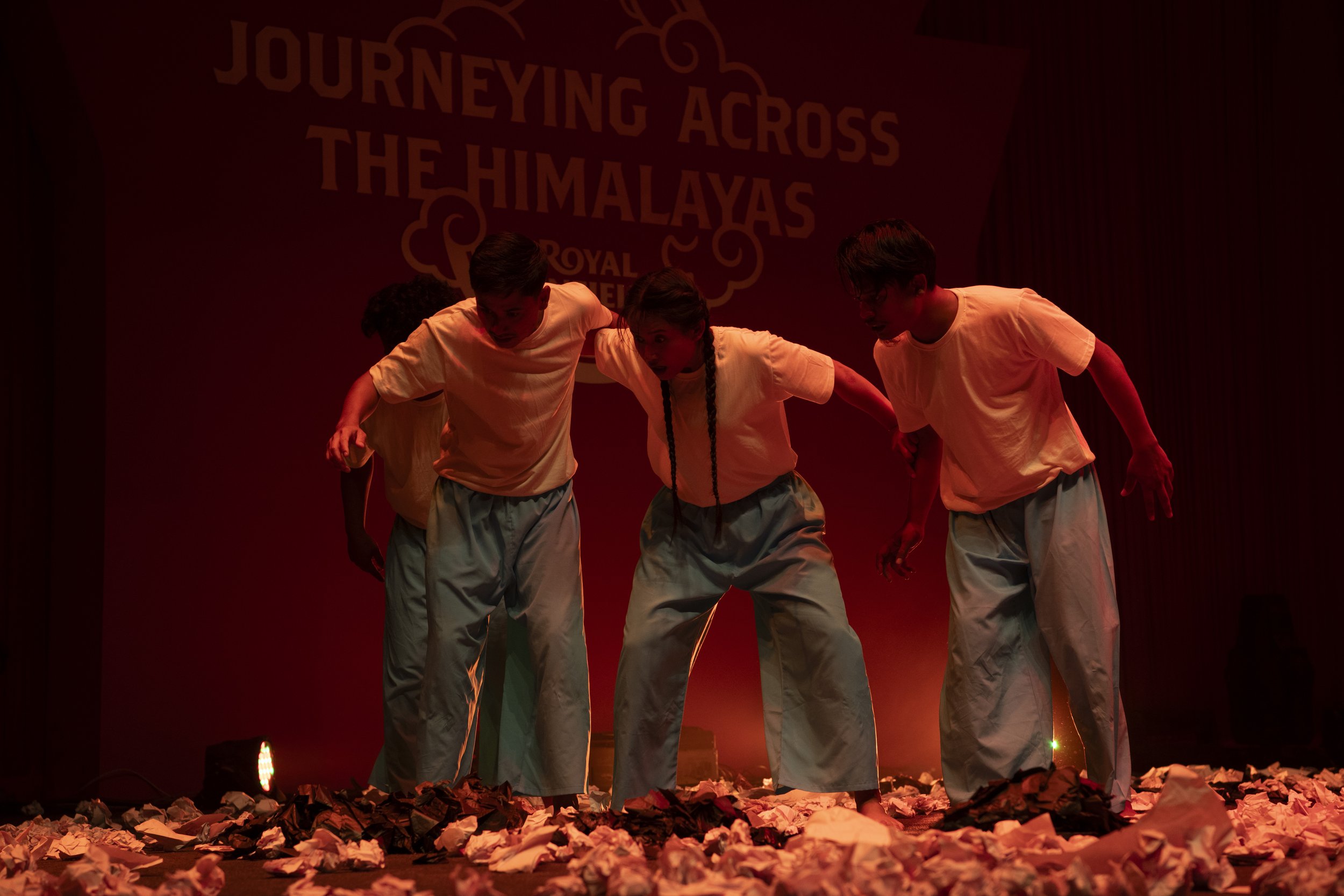
The Will from the Unspoken Banks
A performance by Thoudam Victor and Akhoka Theatre
The Will From The Unspoken Banks is a performance created by Akhoka Theatre under the direction of Thoudam Victor. The performance explored the venerable relationship between humans and river systems in Manipur, through gestures of repetition as a process. It tells the story of a longstanding co-existence disrupted by aggressive development projects over time, risking the lives of villagers (of Nungbrum) who nurtured and cared for the river to return to its state of bygone days. As forces of resistance grew, oppression became repetitive and brutality dominating, but the souls of the villagers remained steadfast and untainted. For the body may become feeble and shattered, but the soul yearns for the river to flow freely. Finally, the will from these unspoken banks cannot be unheard.
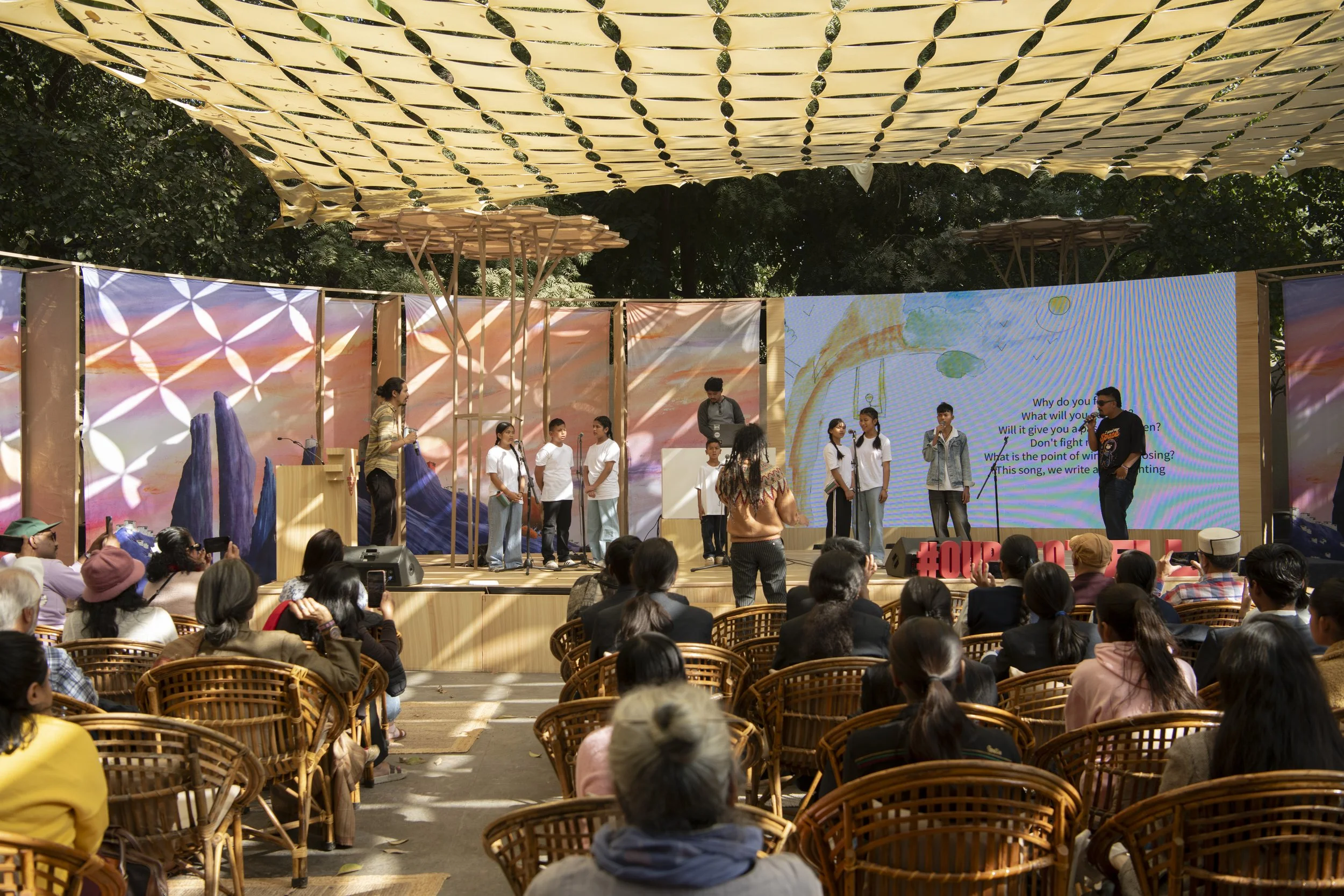
Performances by Teesta Kids Arkestra and The Beginners, Singing group of Geil Khola
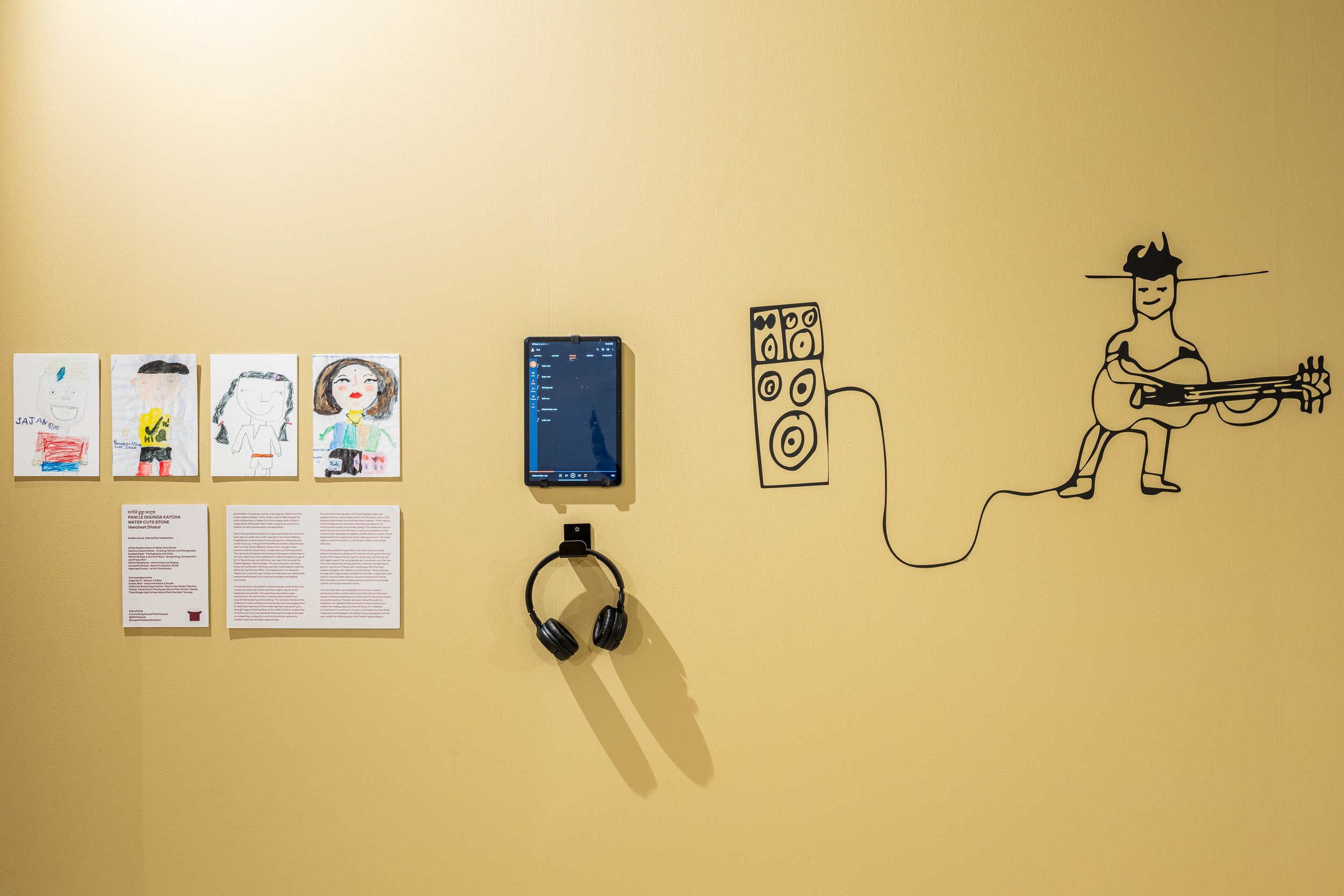
पानीले ढुङ्गा काट्छ | Pani le dhunga katcha (Water Cuts Stone) Youth Music and Arts Programme
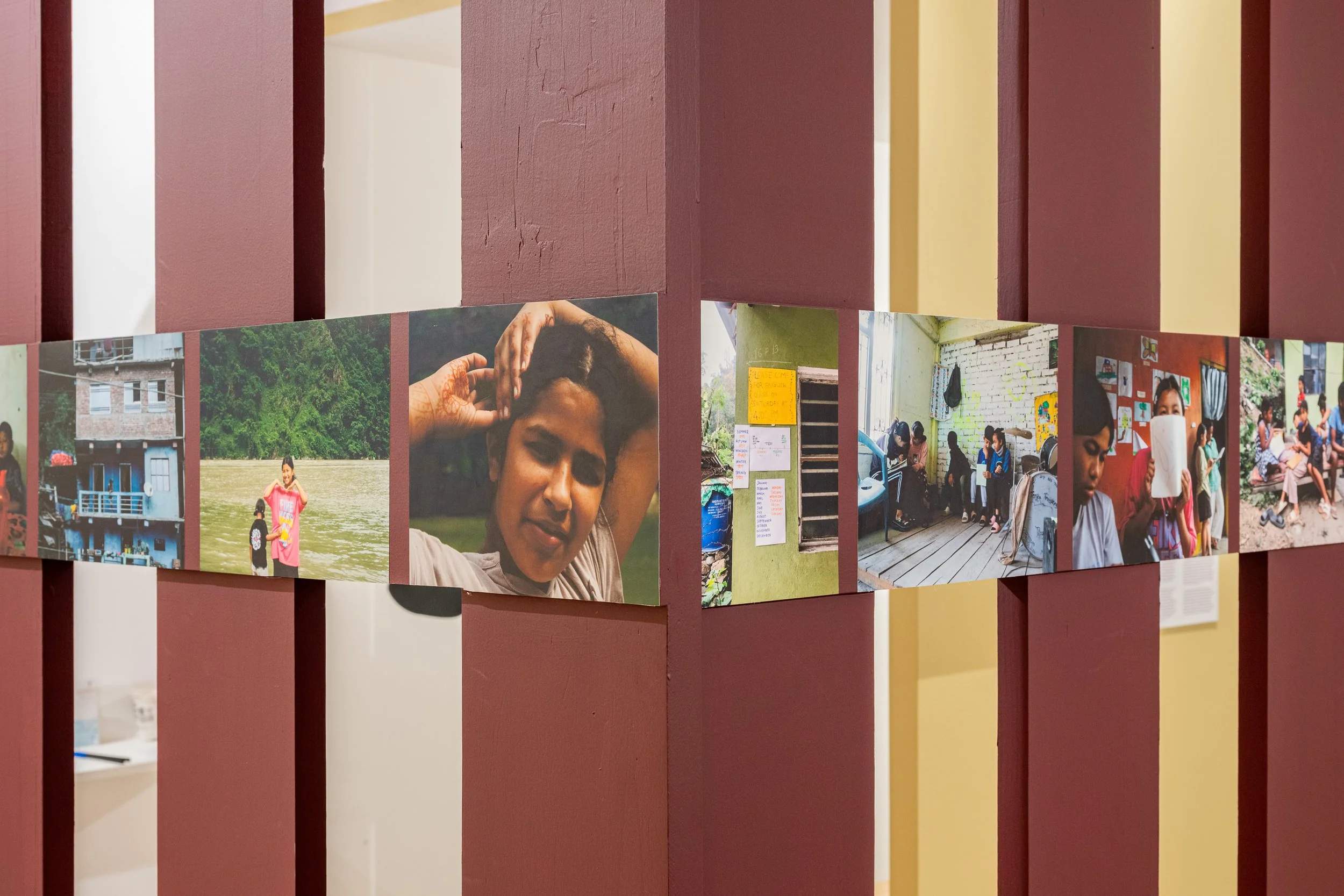
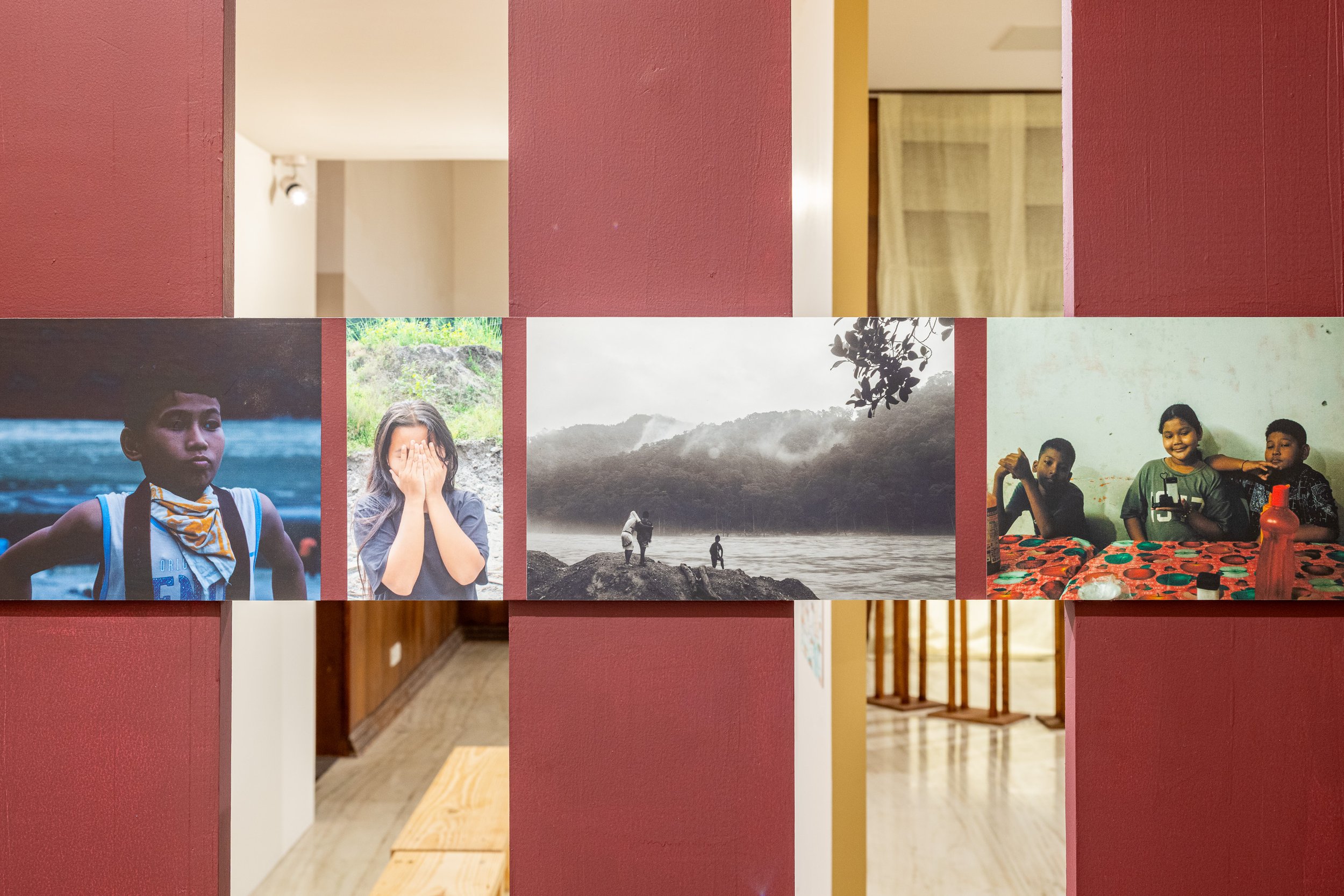
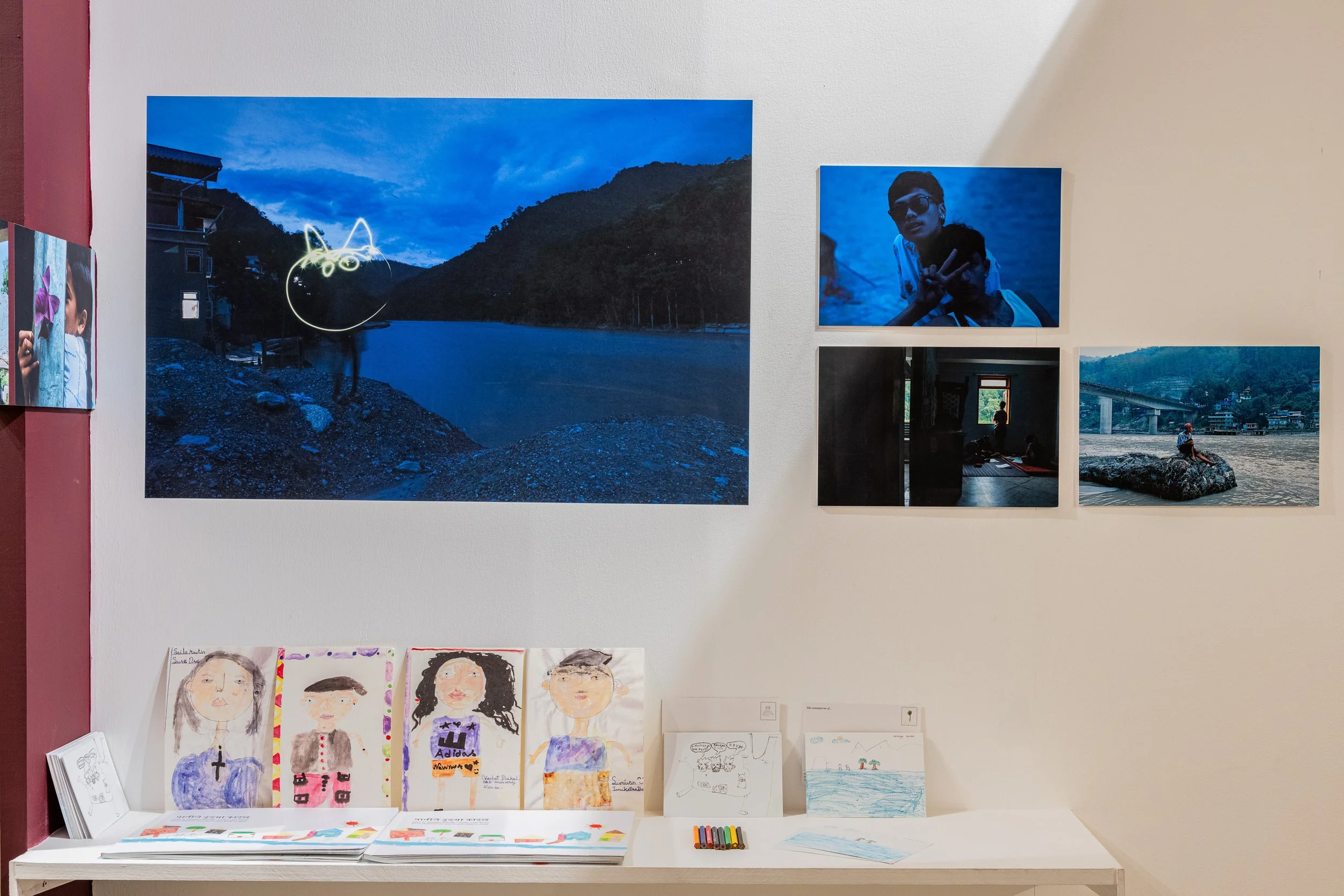
A music and visual programme presented by children from Teesta Highway Region, northern part of West Bengal, featuring songs written and performed by them. Artist-coordinator Veecheet & the artist-collaborators of "Water Cuts Stone" over the course of several years, engaged with children's imaginations of the place they inhabit, using music and art as a medium for self-representation and expression.
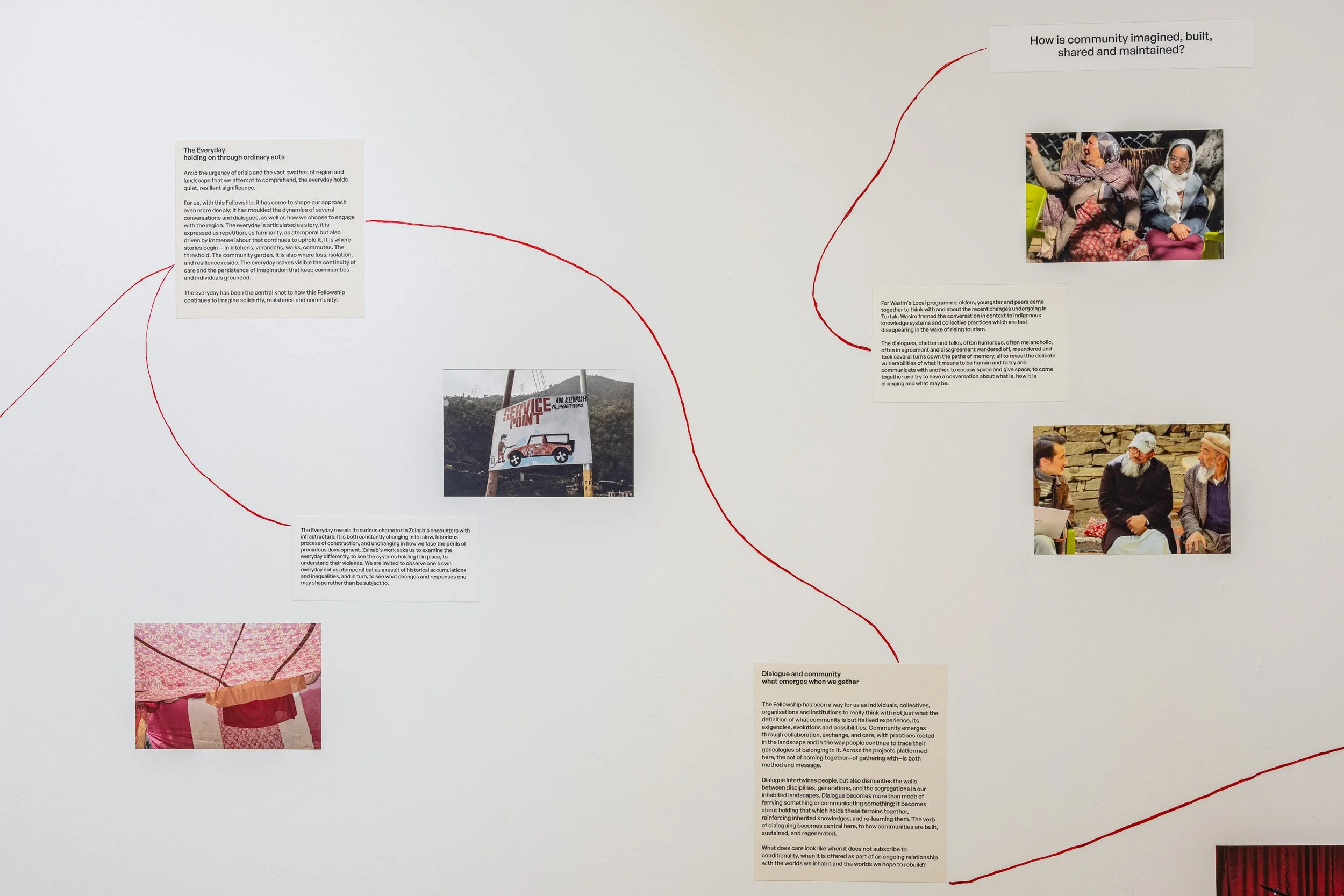
Since the last three decades, the Teesta Highway region has experienced the onset of large infrastructural projects such as the National Hydro Power Dams and the Indian Railways. These regions of the Himalayas have now been irreversibly damaged by the infrastructural assault and climate change. The people who live and work in these areas find their lives in a precarious balance, amidst routine floods, landslides alongside a volatile political context of land displacement and suppression by the state government. Pani Le Dhunga Katcha started as an open community jam room four years ago in a small room under a garage on the Teesta Highway. Imagined as a creative space for young people to collaborate and create music, as a refuge from the difficult conditions they live and work in on the Teesta Highway, the jam room, through music, became a site for conversation, collaboration and self-expression.
The songs presented include Aama, Khola ko kinar ma, Feri aayo, Ladai, Baato, and Galti.
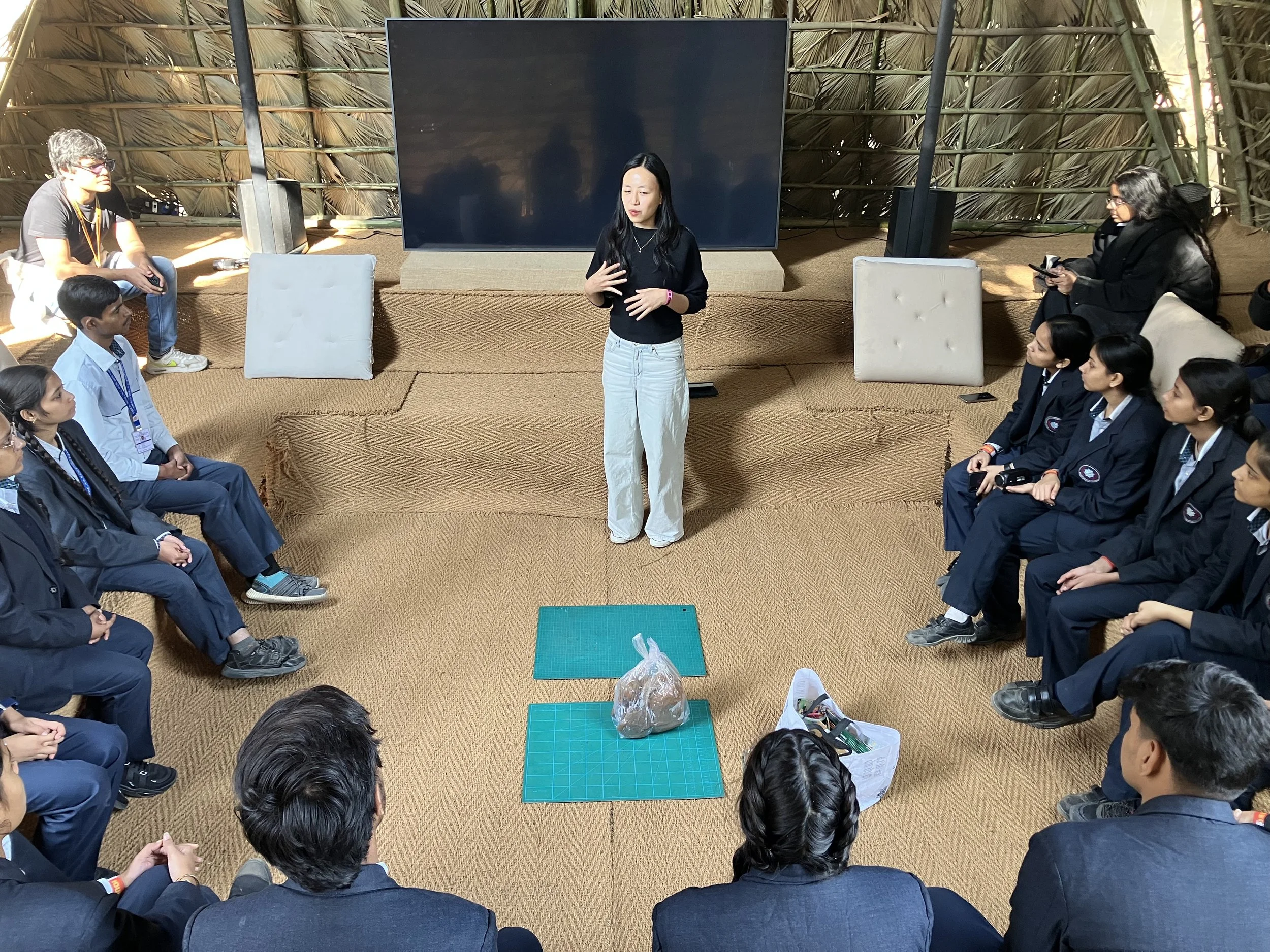
Where is My Laughter? Exploring laughter through stories, folklore, and play
A workshop by Arieno Kera
The workshop focused on laughter as an entry point into the relevance of storytelling and folklore as powerful mediums. Taking the examples of select oral narratives such as how a tribe in Nagaland came to acquire laughter, participants gained insight into how a concept or idea such as laughter can and has been expanded through storytelling to acquire tangible forms. Participants were invited to first give voice and reimagine a laugh for an animal, and further used clay to build a storage item that can protect and hold laughter, witnessing the potency of how materials and objects interact with complex physiognomical, philosophical, social and cultural concepts.
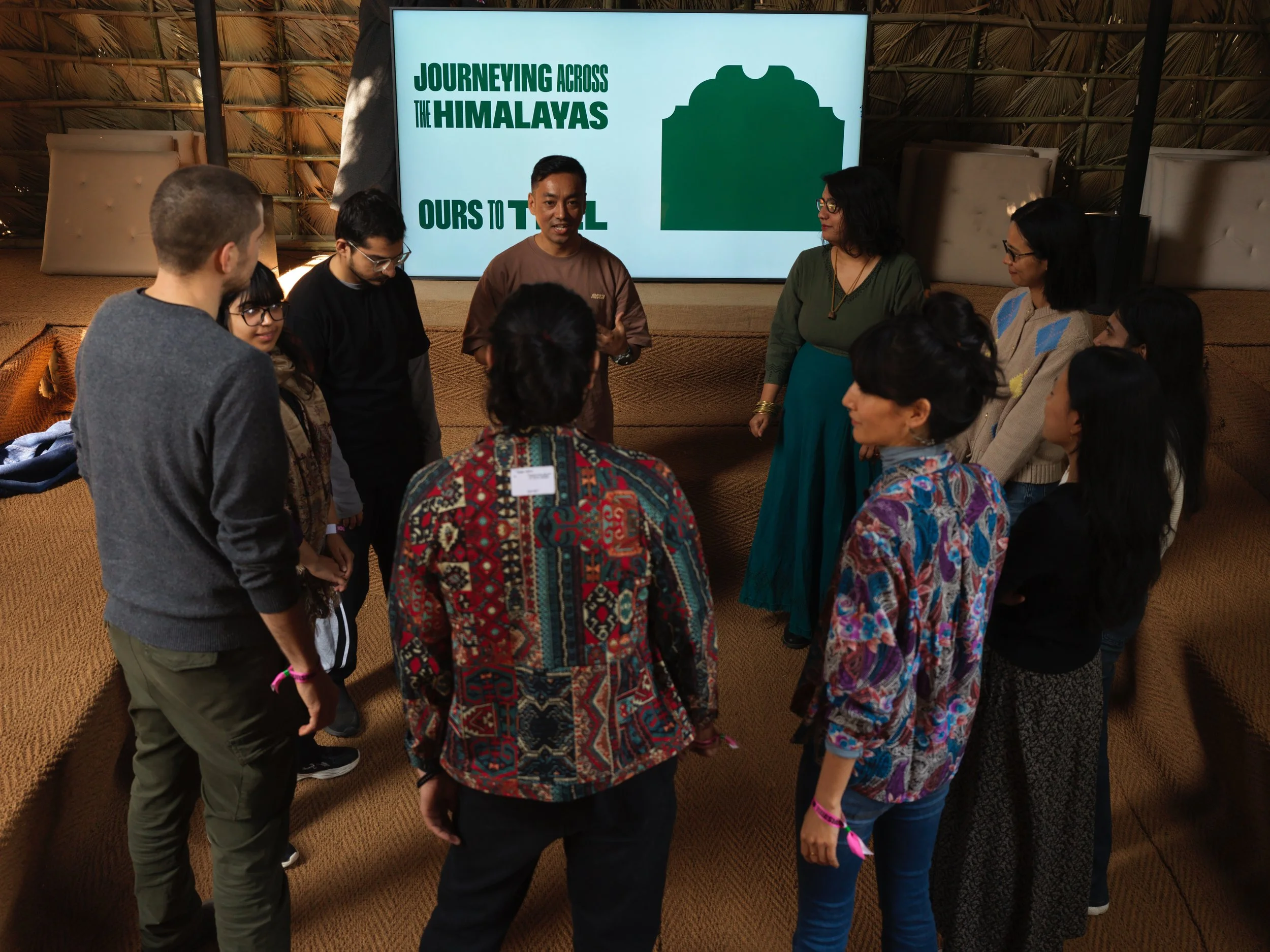
Invisible to Visible: A Movement-Based Exploration of Body Poetry
A workshop by Victor Thoudam
The workshop invited the participants to engage with attuning to our body in novel ways. Participants played theatre-inspired games, working within a set of rules to move and pass on an action, or energy, in a circle format to build ensemble and sharpen focus. This workshop fostered a space for collective exploration of cultivating presence and the relationship between language, communication and the body.