FICA, Royal Enfield and Ladakh Arts and Media Organisation (LAMO) present
On Ties that Bind
Ecological and Cultural Practices of Care
A Symposium in Ladakh
4–6 September, 2026
LAMO Centre, Below Leh Palace, Leh, and Pit Stop Kharu
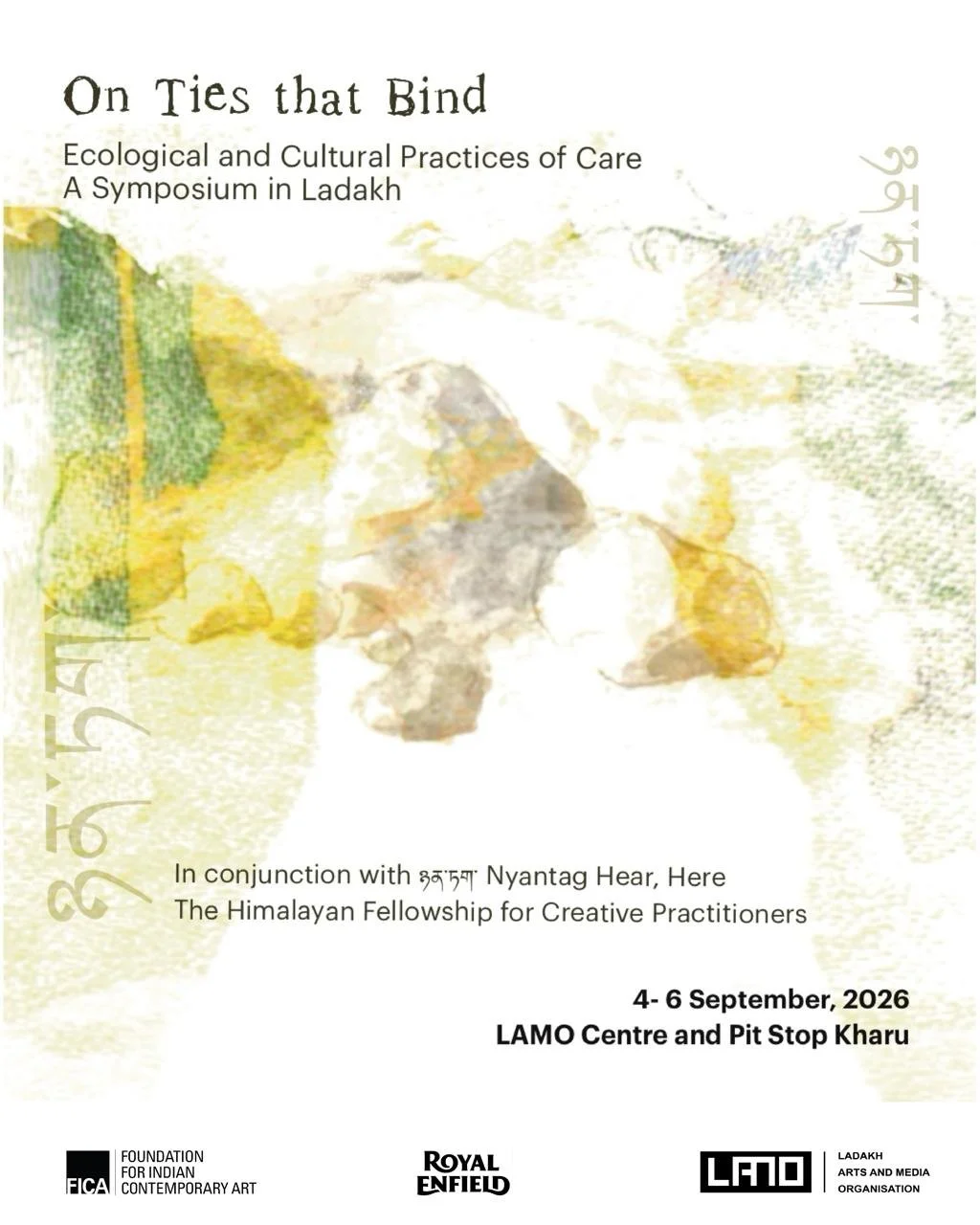
In conjunction with our two venue exhibition, Nyantag. Hear, Here at LAMO and Pit Stop Kharu, FICA, Royal Enfield and Ladakh Arts and Media Organisation (LAMO) present a symposium gathering practitioners engaged in practices of care of land, people and places in the Himalayan region. An extended forum from our ongoing THF Dialogues series, the symposium is an attempt to explore shared understandings and diverging pathways bringing various contexts, histories, borders and practices into dialogue, while acknowledging, and heeding to the local landscapes, their stories and how people are telling them. Spanning three days, the programme consists of four conversations around the themes of Pastoral Dialogues, Water Scarcity, Material Culture, and Story-telling.
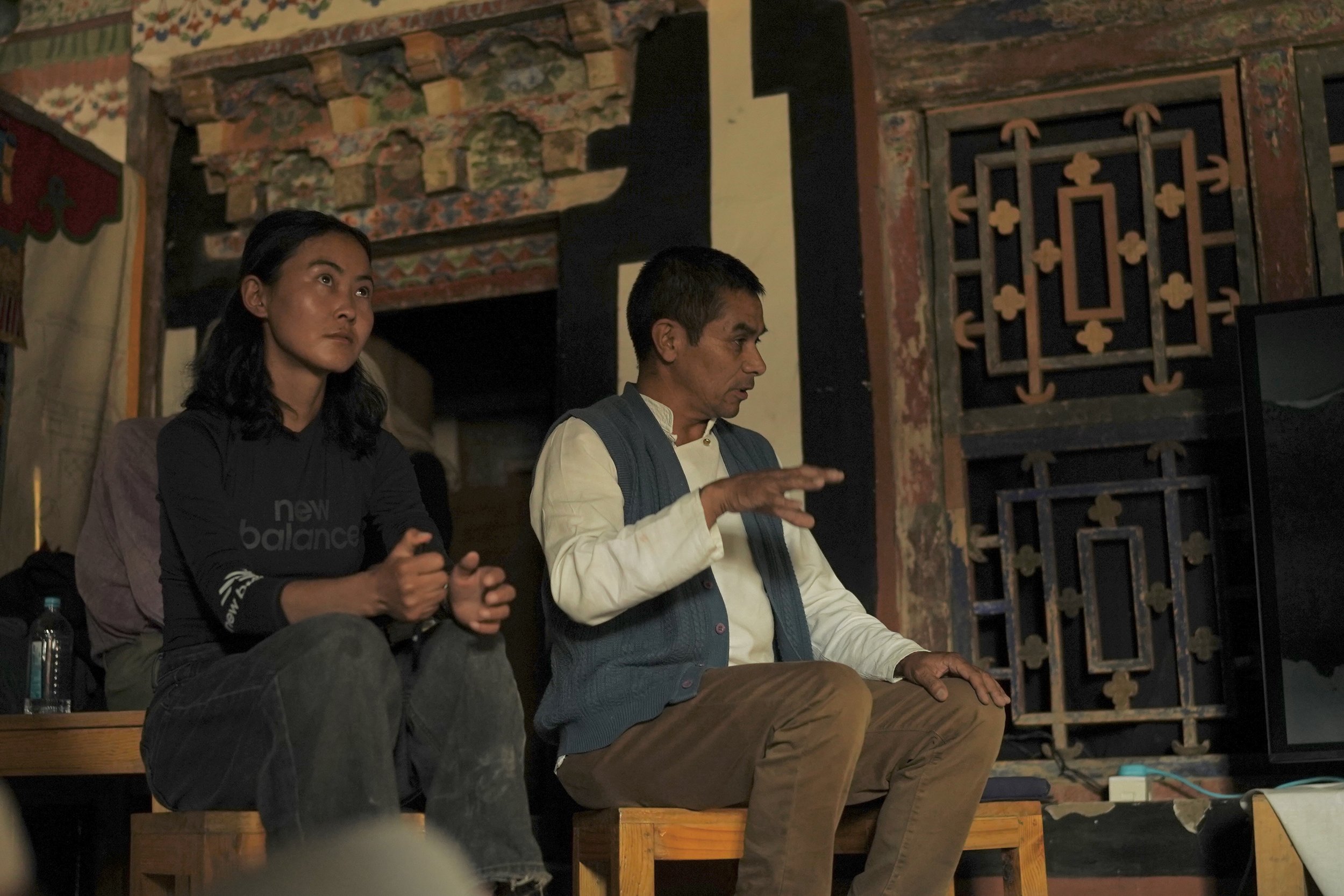
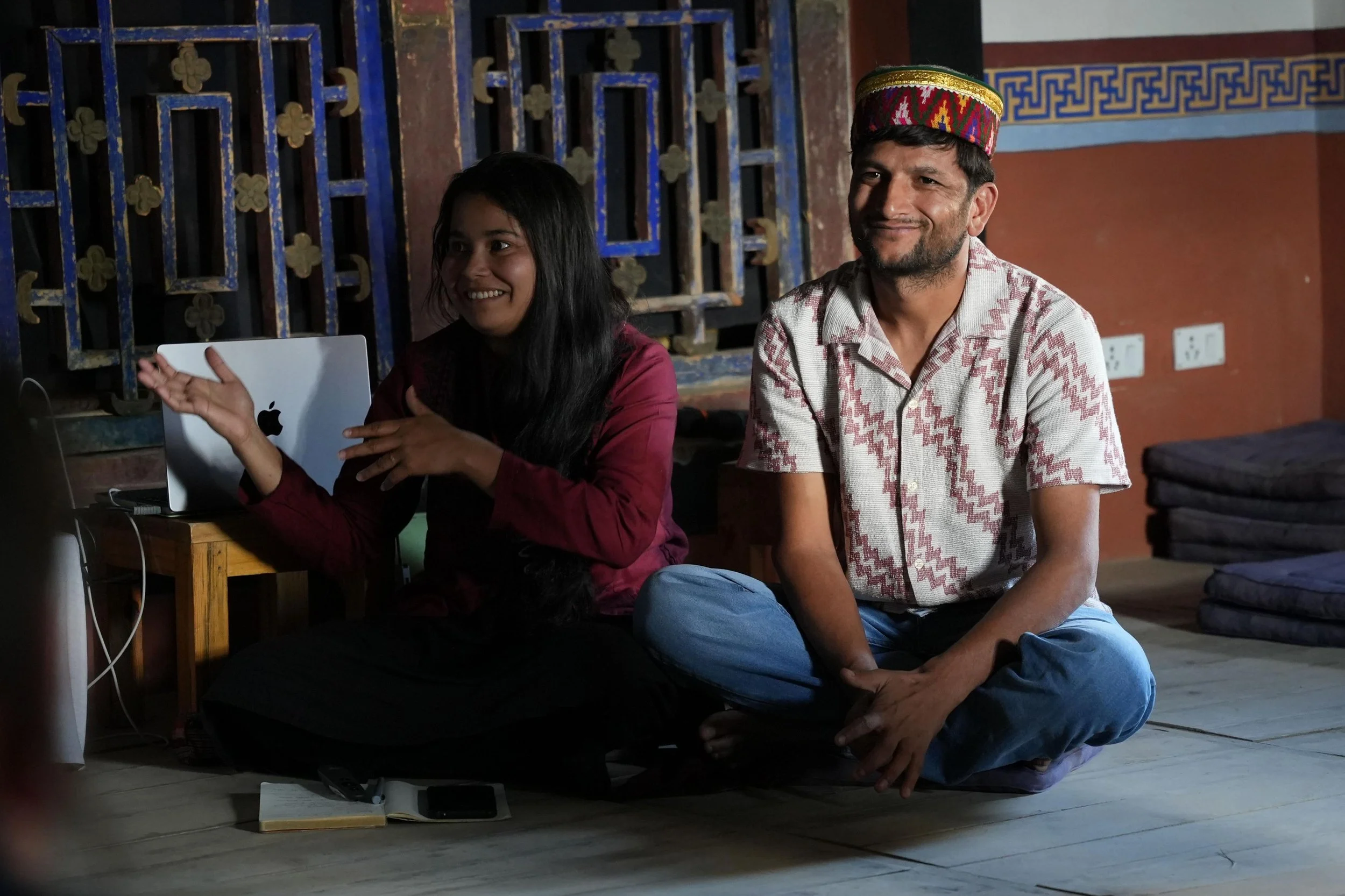
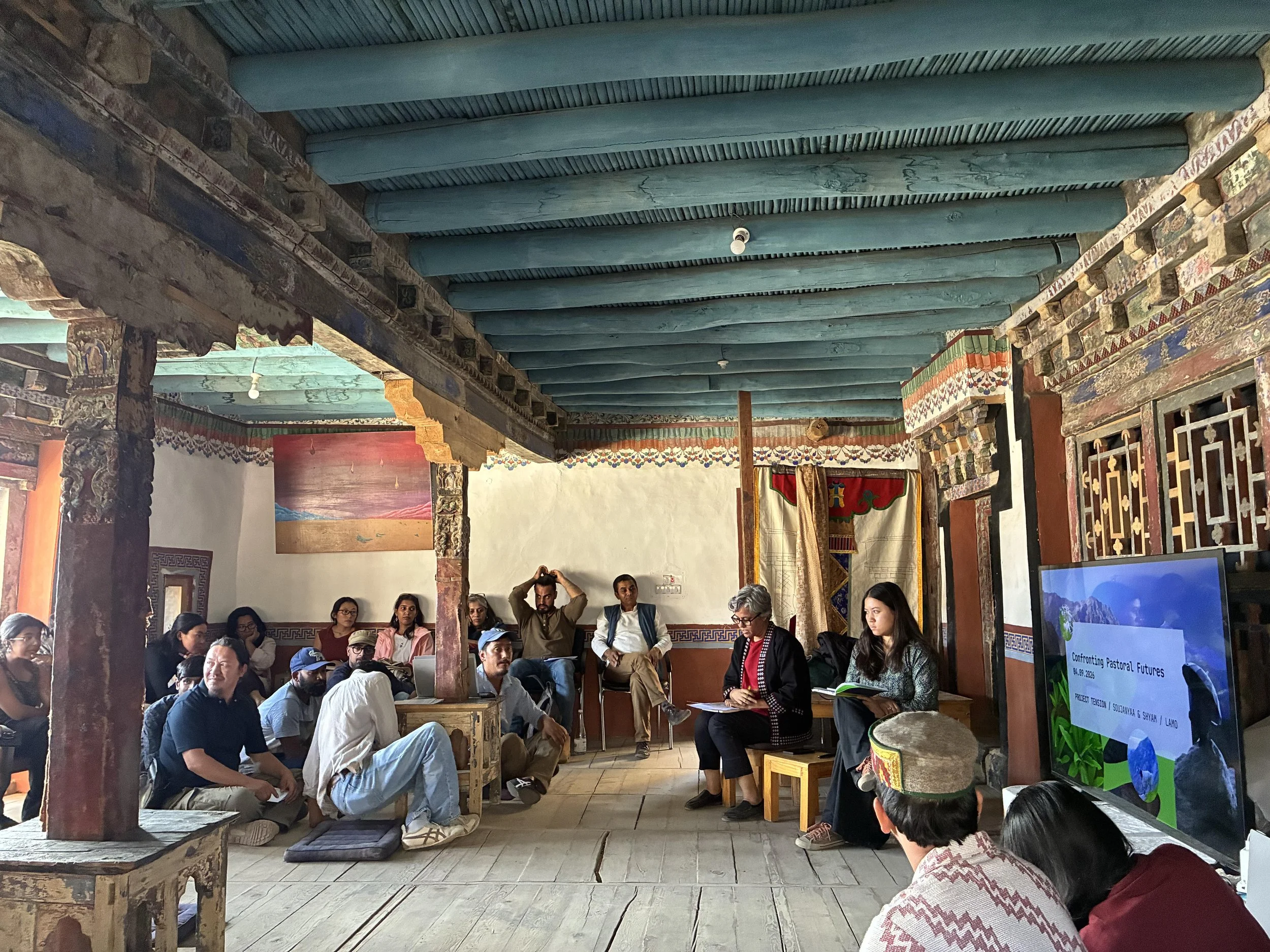
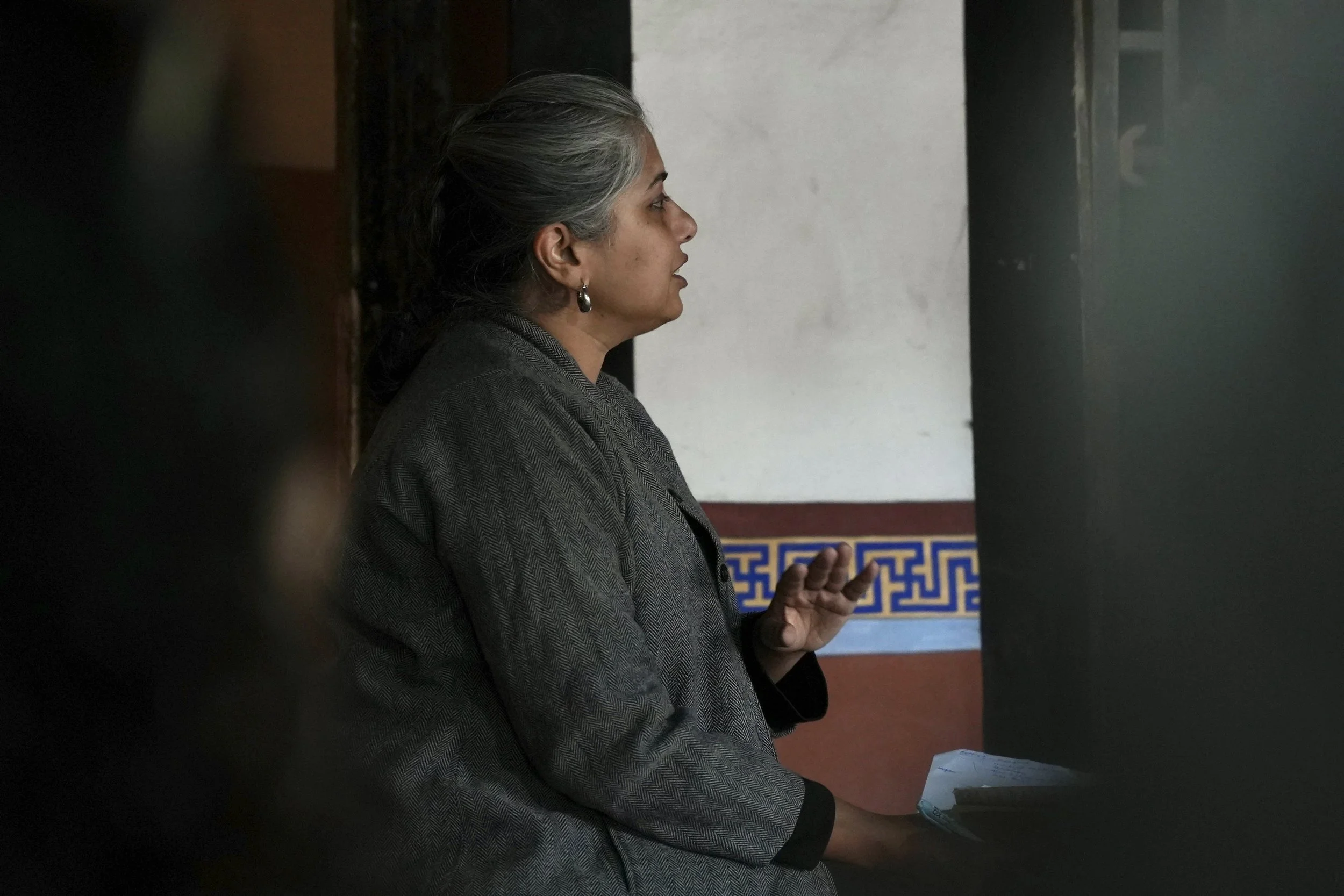
Soujanyaa Boruah and Shyam Lal (Artist Duo) Tsering Ladol (Herder), Tashi Morup in conversation
Moderated by Stanzin Yangchan
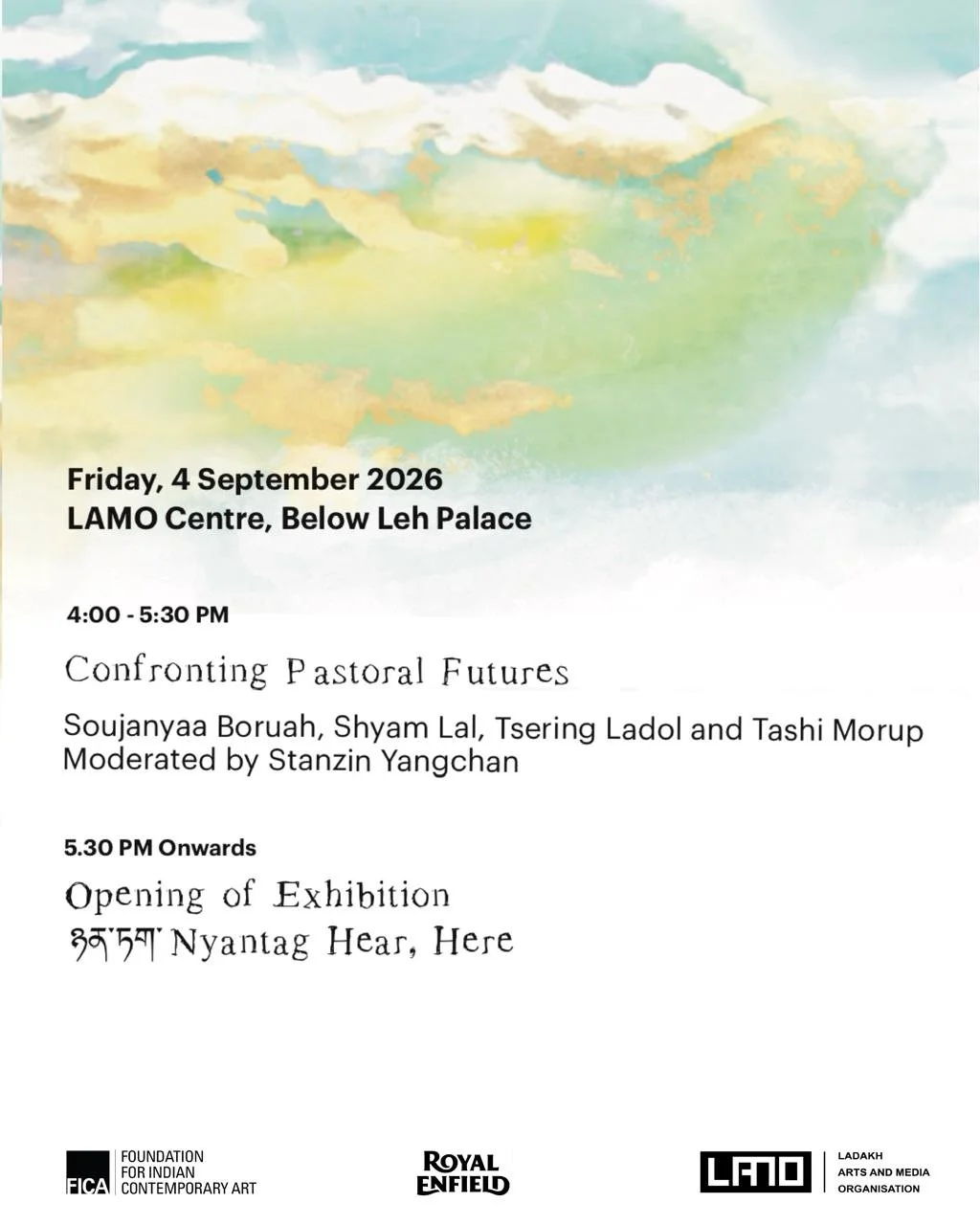
Confronting Pastoral Futures
Rooting their project in Gaddi practices and presenting their work with Project Tension, Soujanyaa Boruah and Shyam Lal presented a simple, yet poignant question in Ladakh—what does it mean to sustain Pastoral life when the landscape is changing so rapidly, when the ground beneath one’s feet is slipping away?
Tashi Morup then shed light on his experience and learnings from Changthang and how a combination of rapid changes—less available grazing land, modern infrastructures coming in—had led to a diminishing pastoral population. Tsering Ladol provided insights into the ground realities as an active pastoralist. She talked about reviving a way of life and set of values, of maintaining a reciprocal relationship with the animals. Considering the large history of symbiotic co-functioning they had sustained over generations, she felt it was her ethical prerogative to not abandon the animals now that they needed them. The conversation then opened up into the many intricacies of these values, for both Shyam and Tsering, and how embodying them required undergoing rigorous physical and mental toil which was only exacerbated by unfavourable systems, relations and perceptions of pastoralism becoming prevalent in the modern age. The audience also actively opened up the discussion, bringing memories of nomadic pasts, objects, rules and regulations and ways of existence which they had experienced and which had once been a part of everyday life and how they were changing and being experienced today.
Questions directly related to land, water, ethics, kinships, relations, memory and people framed the exchange — Where does the herd graze? Where does one find good grass? How much grazing land is left? Will there be a next generation of shepherds?
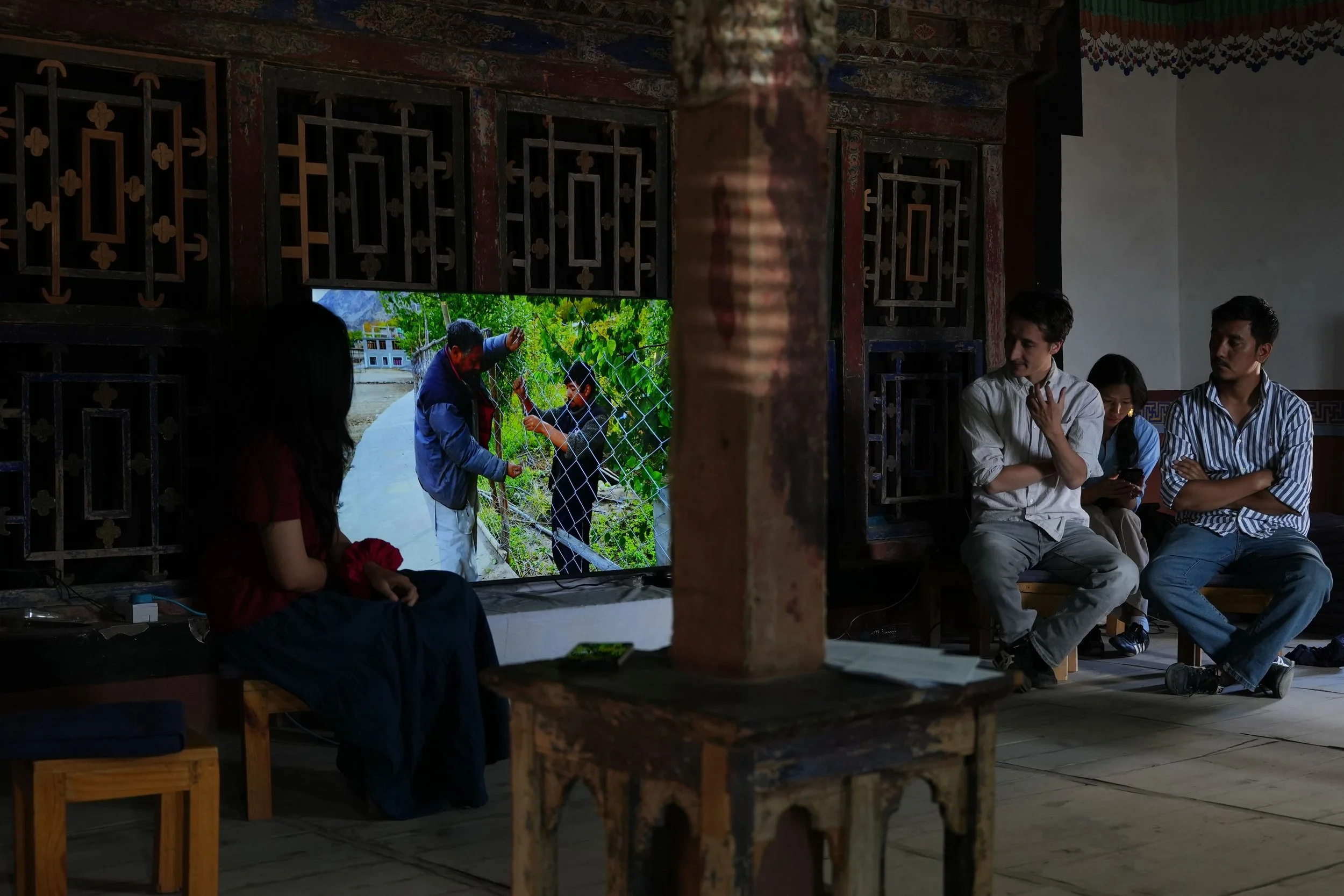
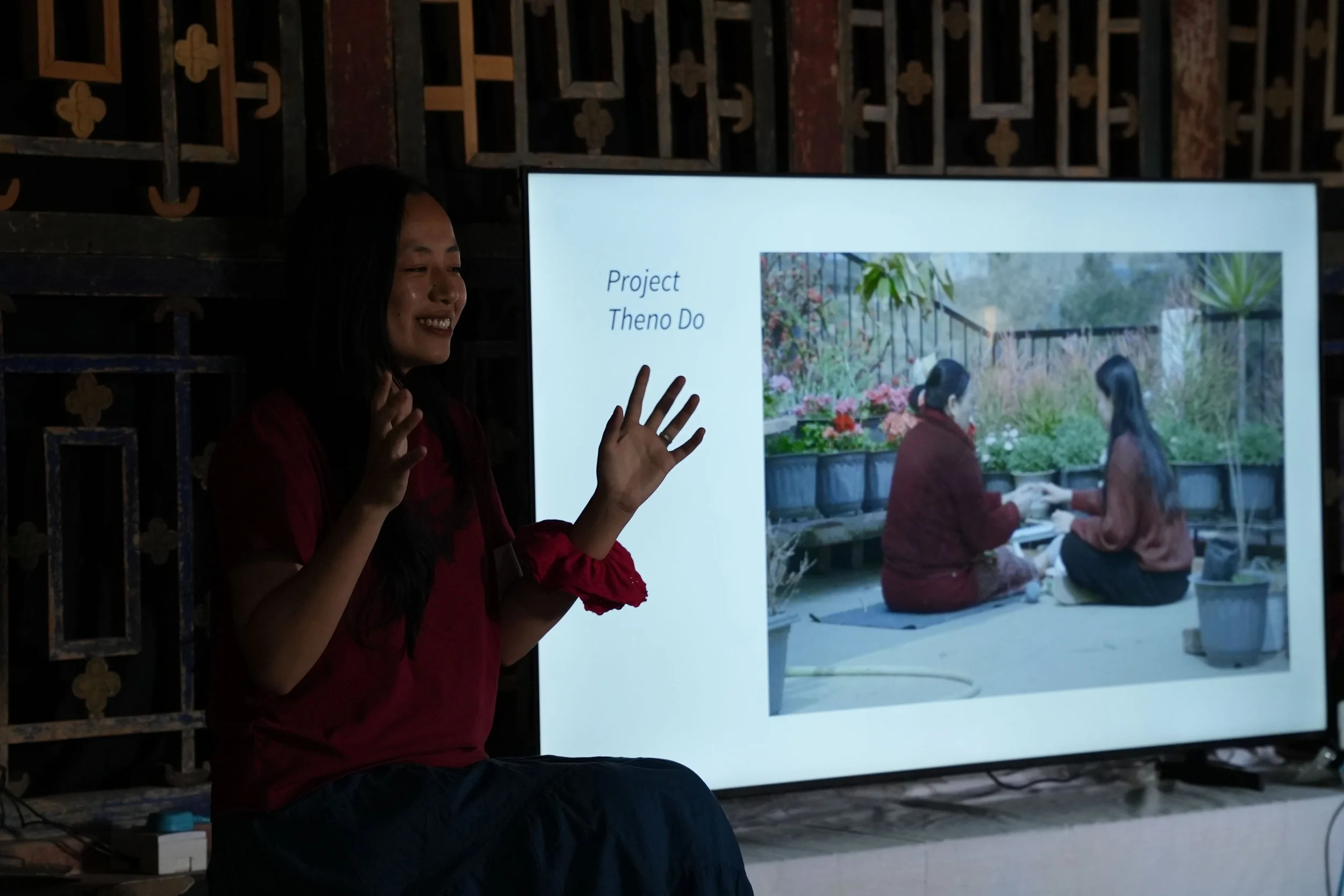
Arieno Kera, Tsering Motup Siddho, and Wasim Ashoor in conversation
Moderated by Latika Gupta
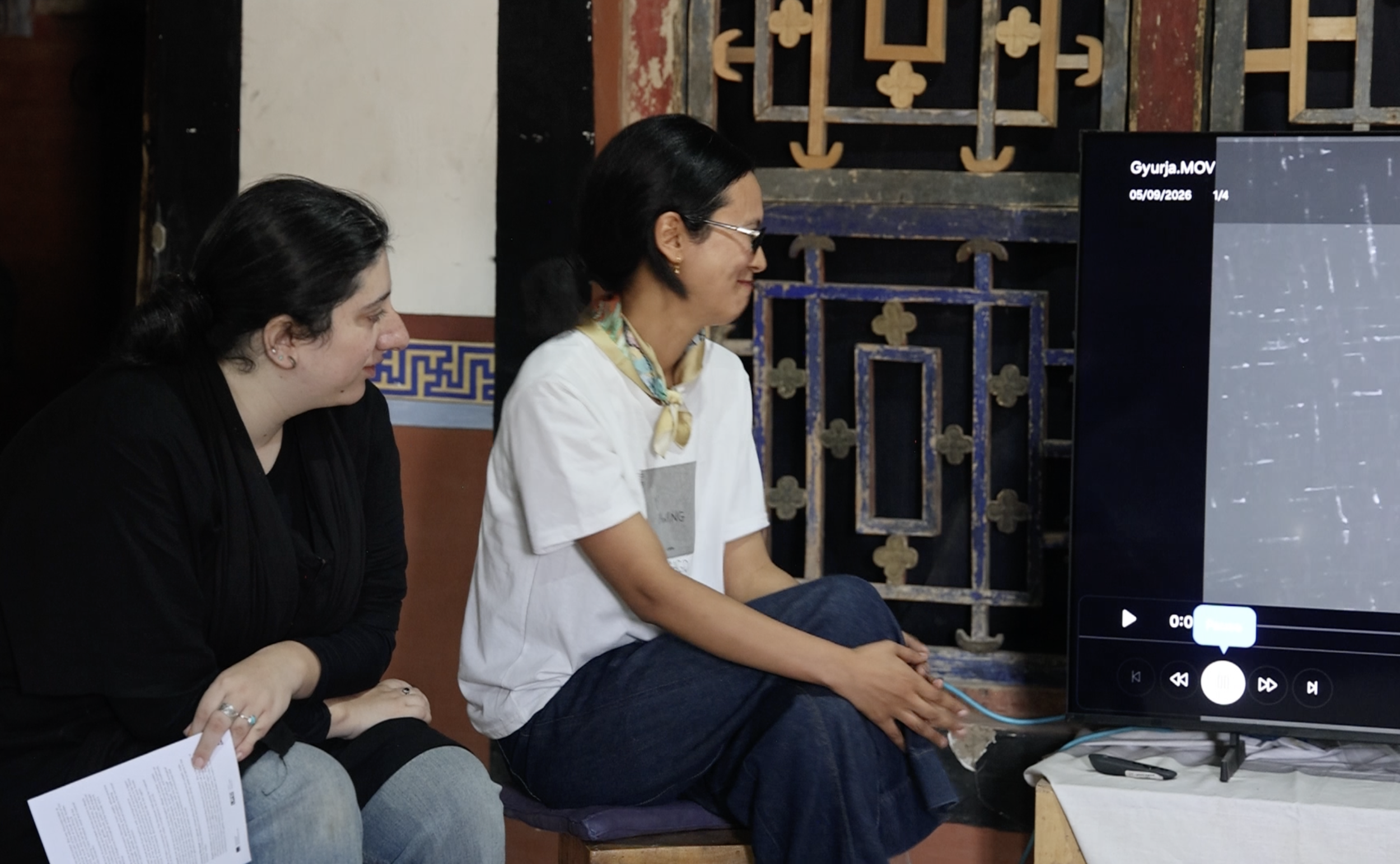
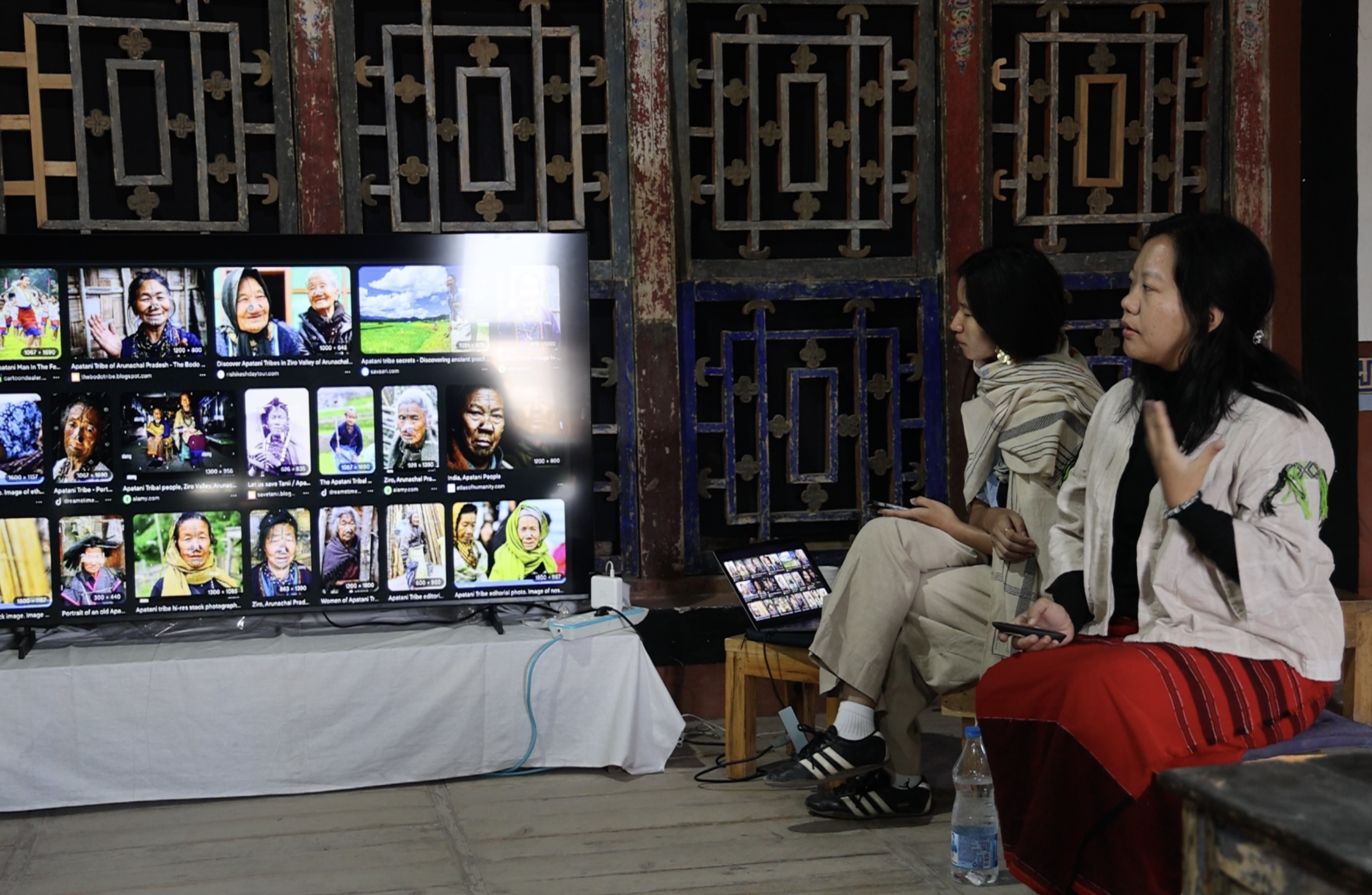
Millo Ankha, Tsetan Angmo, and Zainab in conversation
Moderated by Eva Arambam
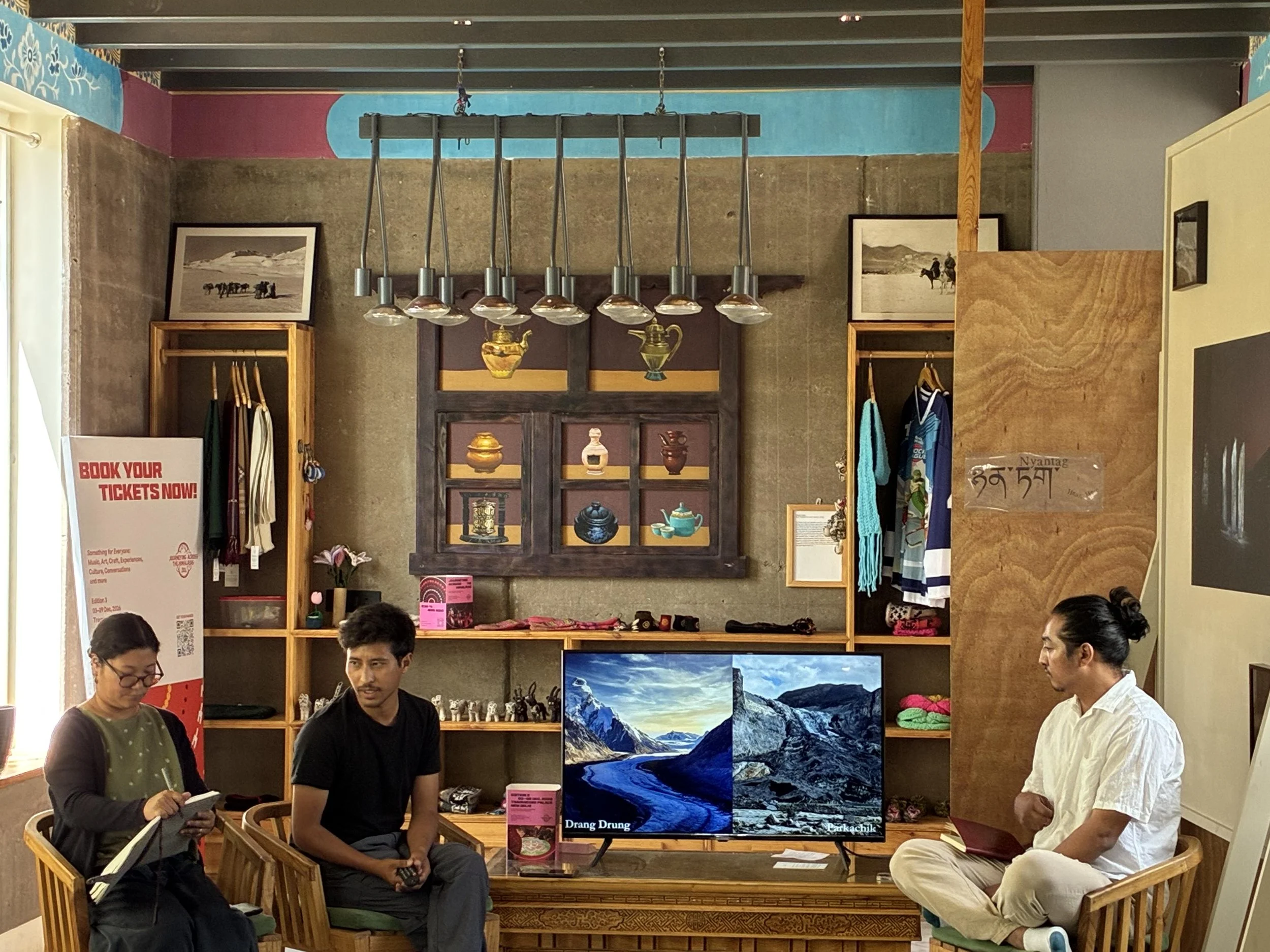
Stanzin Tsepel, Lobzang Wangtak in conversation
Moderated by Rigzin Chodon
Embodying Memory: Place, Materiality and Forms of Knowing
The conversation opened up Material Culture as existing with a set of relations grappling with tradition as inheritance, of sacredness as a way of living, with rapidly changing space and our relationships with more than human worlds and languages. Arieno’s project, Spelling T-A-M-A-R-A looked at a folktale surrounding the three stones at Chadze Lophi in Makhel village which are remembered as bearers of ancestral lineage, brotherhood, and the departure of the Tenyimia Nagas. Beyond bearing witness to the past, they continue to speak to the present while carrying intimations of the future. Tsering Motup’s The Indus that flows from my kitchen looked at the aesthetics, maintenance and spiritual values which go into shaping a Ladhaki kitchen with its many components, as a place of gathering, feasting and exchange which Motup experienced on his journey travelling along the Indus River. Wasim Ashoor’s Hands that Hold the Land looked at the possibilities of collective action, especially against a very rapid onset of modernisation in Turtuk by looking back at certain traditional Balti knowledge systems and concepts and how these concepts and practices created certain value systems, which become necessary, especially in places with limitation of resource, which have historically always been held in common.
Moderated by Latika Gupta, the conversation expanded into thinking with artistic research and material practice and how they allow space to move away from a quantitative model of understanding the world, to deeply engage with embodied experiences and imperfect ‘data’, to think of complicated shifts around spatial constructions changing societal ontology, ideas of departure and return and the place an artist may occupy when thinking with tradition and folklore.
Rhungs: The Stories We Tell
Through various anecdotes and thinking with processes and projects, the conversation paid acute attention to how certain historicities and socio-economic shifts create unique spaces for narratives, figures and re-tellings to emerge, to think about which acts become important to witness and remember, which introspections linger, what revelations stay and how we may tell and navigate these multiple intensities in all their complexity.
Ankha’s traced the journey of Braiding Roots and the many learnings, negotiations and personal conundrums and conflicts she experienced during research, while in the field, and through her reflections, which were also periods of flux for notions of what tradition is and how one may position themselves within inheritance. Tsetan traced her journey with the medium of animation and parallelly, with storytelling, thinking about how a research process shaped the narrative for her animated film Chu Chumik Changti. Zainab looked at the different tenors of working in photojournalism and the arts, and the different kinds of urgencies and sense-making that both allowed. The conversation opened various aspects of how one positions themselves in landscapes, societies, and situations and the prerogatives, freedoms and restrictions that artists grapple with within these.
What are we without water?
This discussion turned to Zanskar and the accelerating pace at which its people are reckoning with the loss of local glaciers. Of how this work demands operating across two temporalities at once: responding swiftly to the immediate emergency of water for basic needs, while attending to the intangible, the long now, and the futures it implies. Stanzin Tsepel, presented his ongoing work bridging scientific research and material exploration to build awareness on the alarming changes taking place in Zanskar. Framed as an emergency, Wangtak’s provocation was also an asymmetry: why does the burning Amazon summon alarm but a receding glacier in the Himalaya does not?
Friday, 4 September, 2026 | 4:00 – 5:30 PM Welcome & opening
PANEL 1: Confronting Pastoral Futures
Soujanyaa Boruah and Shyam Lal (Artist Duo) Tsering Ladol (Herder), Tashi Morup
Moderated by Stanzin Yangchan
We invite you into the dera presented within the exhibition by Soujanyaa Boruah and Shyam Lal for a conversation on how nomadic communities in Himachal Pradesh and Ladakh relate to changing land relations and climate. Speaking from their on ground experiences, the panelists will address eco-anxiety, on what happens to the animals as pastoral communities shift to other ways of life and what it means to think with the more-than-human, on why pastoralism needs to continue and on what terms.
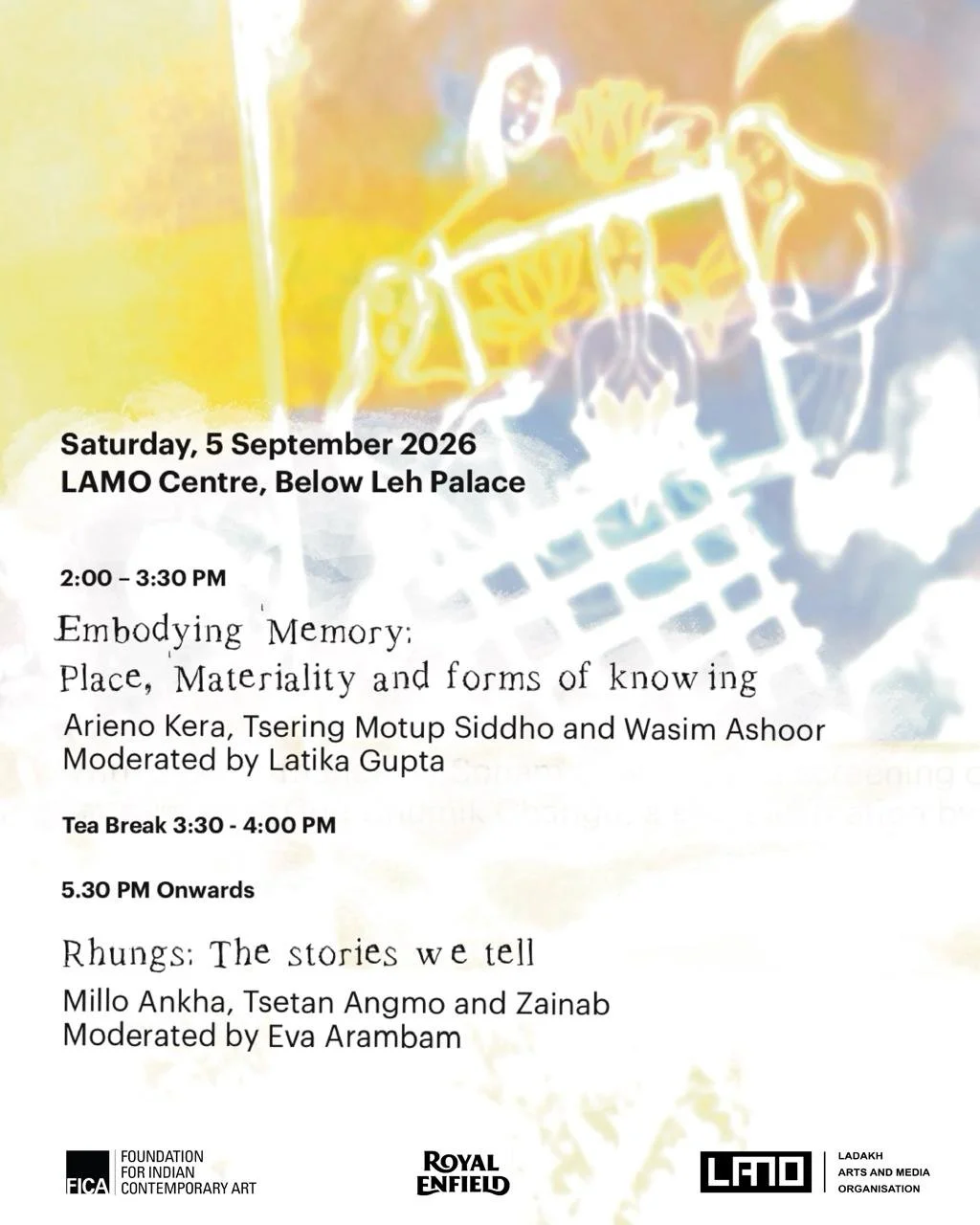
Saturday, 5 September, 2026
PANEL 2 : Embodying Memory: Place, Materiality and Forms of Knowing
| 2:00 – 3:30 PM
Arieno Kera, Tsering Motup Siddho, and Wasim Ashoor
Moderated by Latika Gupta
This panel will bring Arieno Kera, Tsering Motup Siddho and Wasim Ashoor together in a conversation about the relationship between sites, material cultures and the relationships that they engender, as living evolving systems of belief and everyday practices. Asking critical questions about tradition, heritage and preservation, we will discuss ideas of continuity as well as rupture in sites across the Eastern and Western Himalayas, with a focus on material histories, collective memory and knowledge practices in rapidly transforming places and societies.
PANEL 3: Rhungs: The stories we tell
| 4:00 – 5:30 PM
Millo Ankha, Tsetan Angmo, and Zainab
Moderated by Eva Arambam
This conversation traces modes of storytelling through the practices of Millo Ankha, Tsetan Angmo, and Zainab exploring what forms of stories emerge from within the landscapes they inhabit, what narratives we draw from and build toward for the world we want to see. The conversation situates these practices within the wider legacies and histories of storytelling from the region, asking what has been passed down, and what it means to carry these stories forward now.
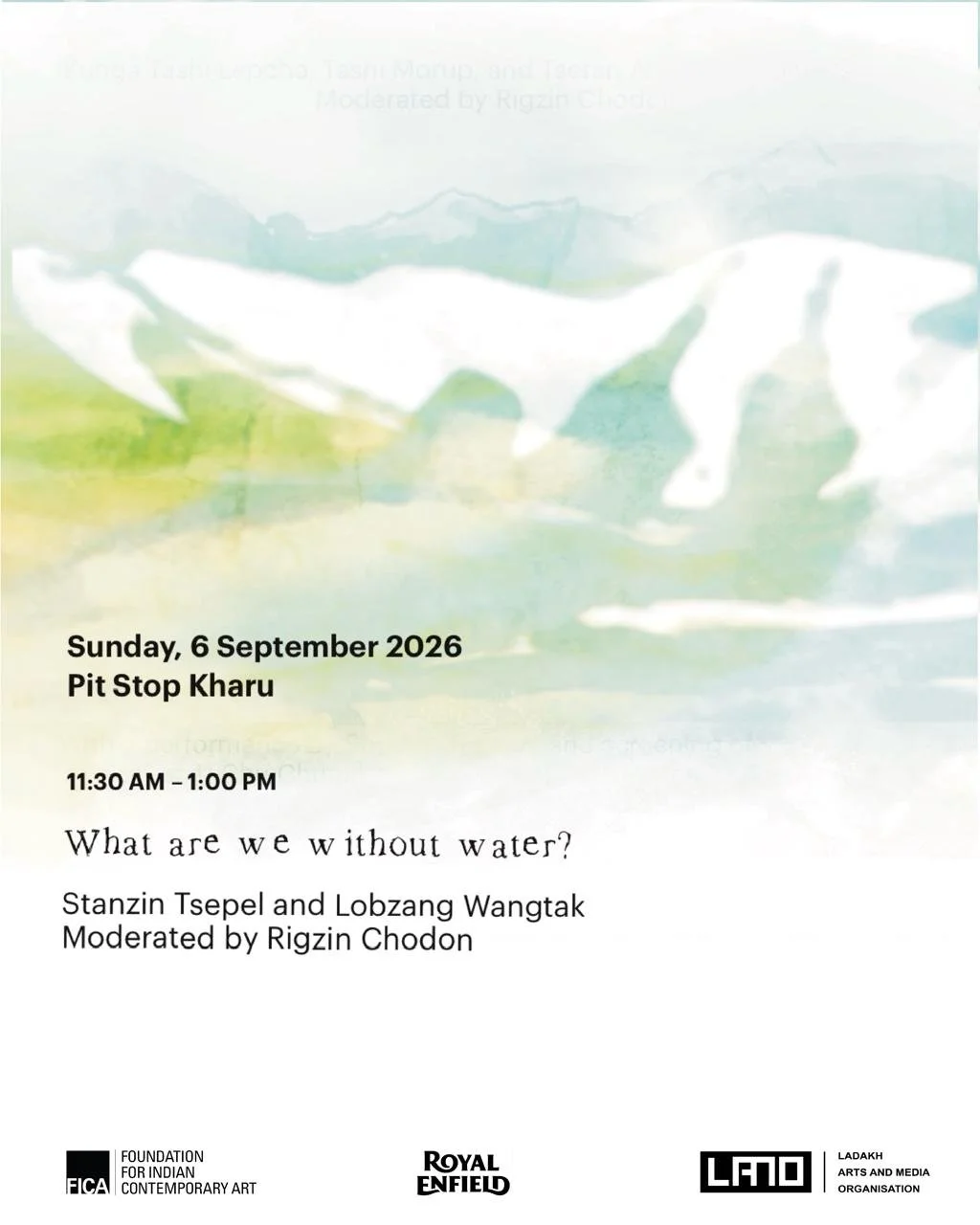
PANEL 4 : What are we without water?
Stanzin Tsepel and Lobzang Wantak
Moderated by Rigzin Chodon
Following a panel on the transboundary rivers of the Indus and Teesta, and river ecologies in July, we return to Kharu to take forth our dialogues on water. The panelists will speak about their ongoing research and engagement around glaciers and water through their artistic and activist practices. Speaking of different processes undertaken, whether building water conservation projects, or using art as a means to forge dialogue between scientists and community members, Lobsang Wangtak and Stanzin Tsepel will reflect on their ground work and the creative projects that have emerged from it.